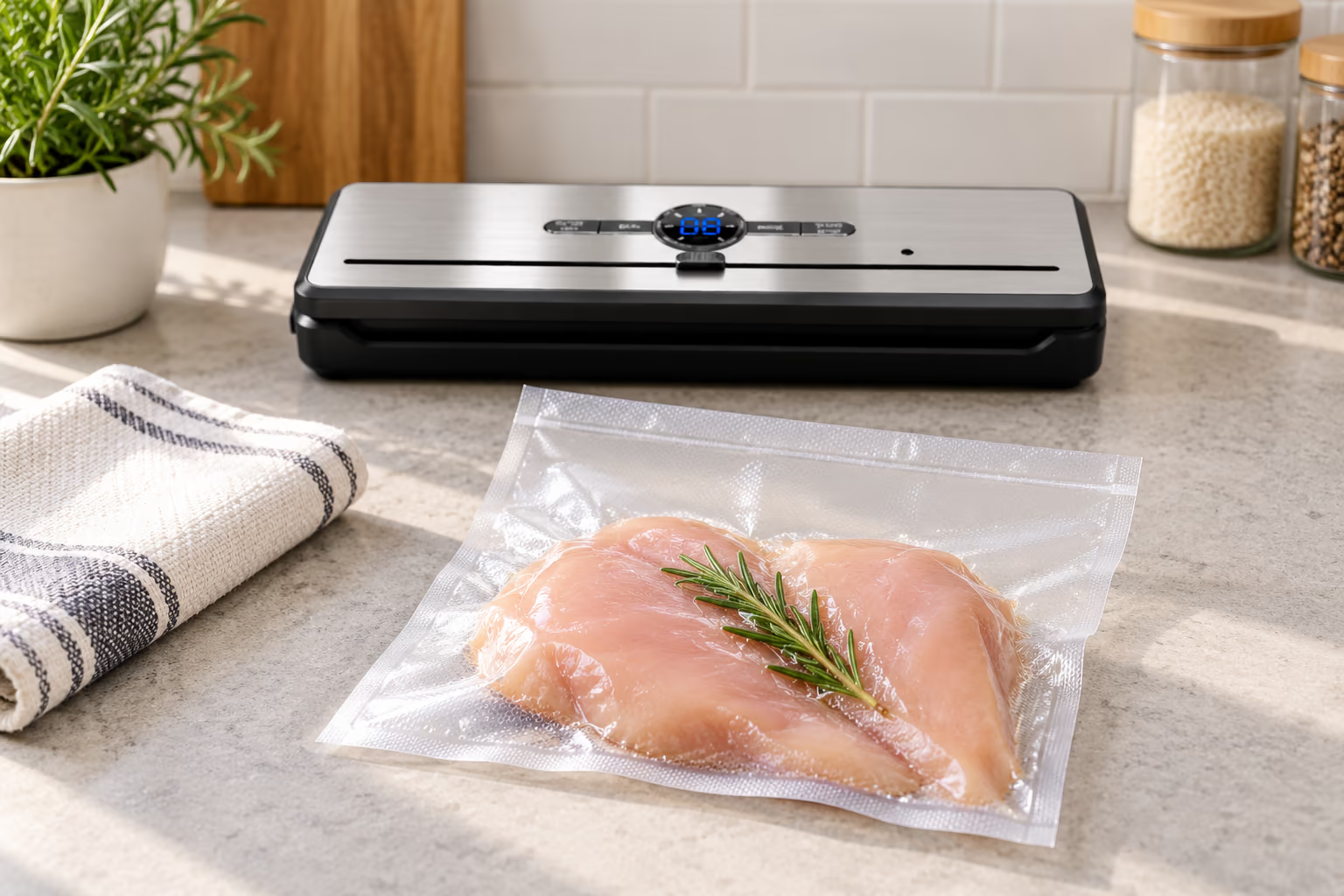
Meat and seafood need vacuum bags that match the sealer, resist handling damage and hold a reliable seal. Packaging supports product quality; safe storage still depends on the food, its history and temperature controls. A tight pouch is not proof that food is safe or that its shelf life has increased by a fixed amount.
Why Meat Colour and Seafood Need Different Checks
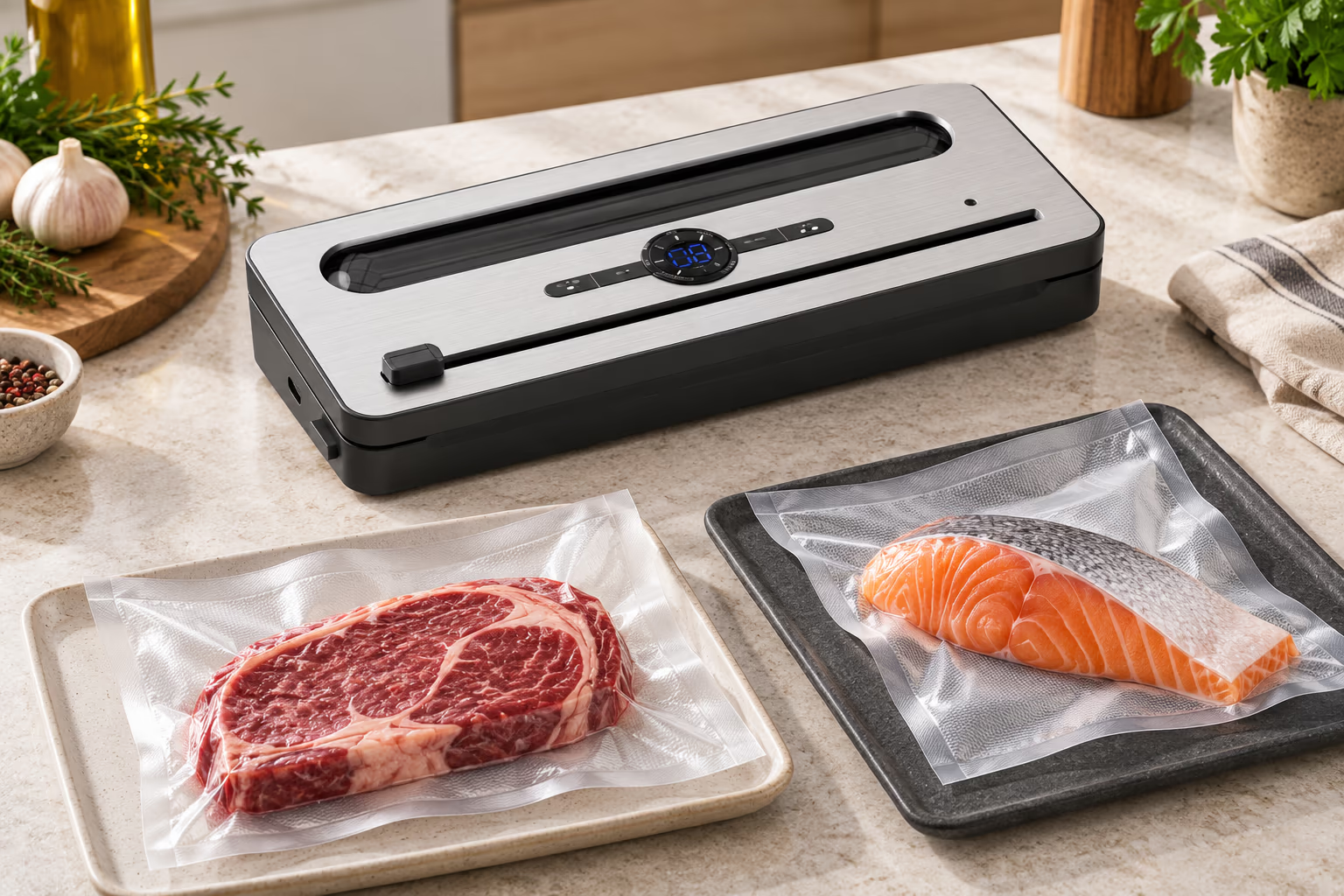
Vacuum-packed beef can look purple-red because its pigment is mainly deoxymyoglobin in the low-oxygen environment. Brown metmyoglobin is a different pigment state. Neither a purple colour nor a return to red after opening establishes freshness. Follow the storage history and handling instructions; do not use colour alone to decide whether meat is safe. See the USDA explanation of meat colour.
Some fish, including tuna and mackerel, can develop hazardous histamine after time and temperature abuse. Vacuum packaging does not remove existing histamine. FDA guidance on histamine-forming fish explains that washing, freezing and heating do not remove it. Preventing the temperature abuse matters more than making the pouch look tight.
Start with Machine and Pouch Compatibility
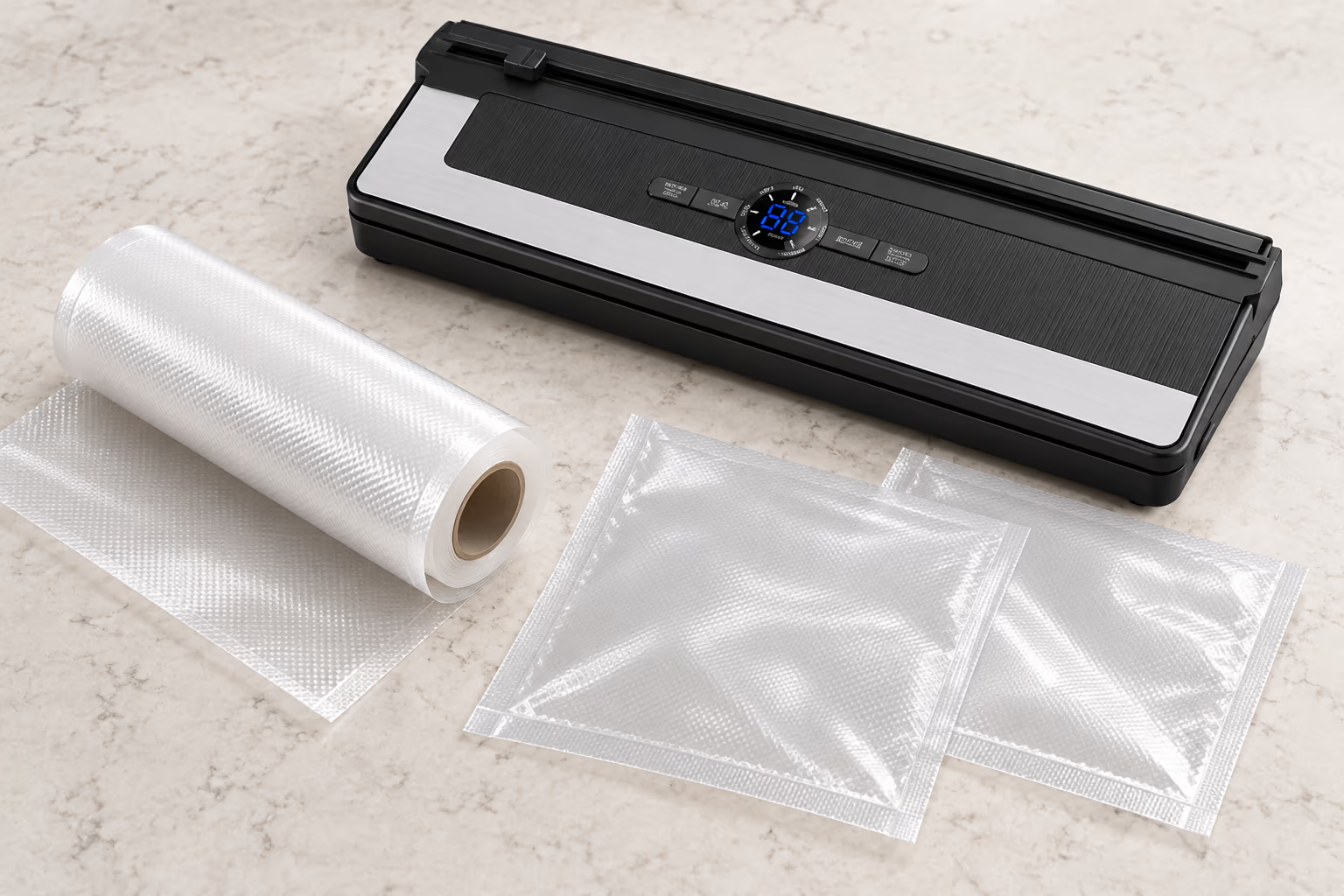
Most channel-type external sealers need embossed pouches to keep an air path open at the mouth. Nozzle-type machines can have different requirements. Chamber machines normally use smooth chamber pouches because pressure falls around the whole open bag. Check the actual model manual before ordering; a hose socket alone does not identify the required bag.
The VATA35 is one external-suction option. Ask for compatible pouch samples rather than assuming every textured film seals equally well. Compare embossed and smooth bags and machine compatibility. There is no universal price saving for smooth film: compare quotations with the same size, structure, quantity and delivery terms.
Choose Thickness and Bone Protection Together
Overall thickness alone does not establish puncture resistance or oxygen barrier performance. Product weight, bone shape, film construction, pouch dimensions, freezing and transport all affect the result. A soft boneless fillet and a sharp bone-in joint should not be specified from the same thickness rule.
For bone-in cuts, use a pouch or purpose-designed bone guard documented for the food and process. Position the guard over the sharp contact area and check that it stays in place during air removal and handling. Protection reduces risk; it does not guarantee that a bone cannot pierce the pack. Do not substitute unverified paper, foam or other wrapping that may be unsuitable for food contact or cooking.
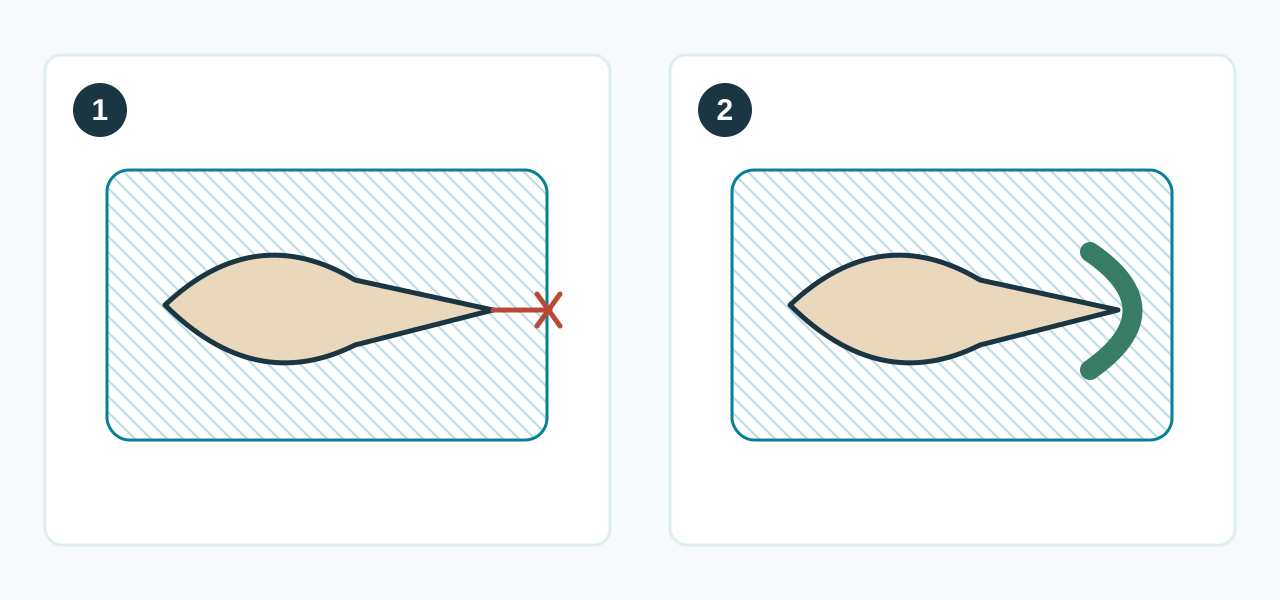
Test representative filled packs after freezing, stacking and transport simulation. Look at corners, bone contact points and seals. See bag thickness and performance for the questions to include in a sample request.
Keep Purge Away from the Seal
Leave enough clean empty neck for the machine’s loading instructions. Arrange the food without stretching the bag tight across a bone or forcing the contents into the sealing strip. Keep raw-food handling separate from ready-to-eat food and clean the packing area using the applicable hygiene procedure.
Liquid that separates from meat during storage is often called purge. Its appearance does not diagnose safety. If liquid reaches the sealing strip, stop using the affected pack as a successful sample: contamination can leave a weak seam or leak path. Use the model’s approved controls and loading method. A moist setting does not authorise drawing free liquid into an external sealer’s pump.
Freezer Quality and Cold-Chain Controls
An intact pouch with an appropriate moisture barrier can help reduce freezer burn. Vacuum packaging is one option; suitable freezer wrapping and other protective packaging can also help. There is no point after three months at which vacuum packaging suddenly becomes mandatory. Stable storage conditions and avoiding mechanical damage remain important.
Use the food’s required storage temperature and time limit. General household refrigerator guidance must not be treated as permission for extended refrigerated storage of vacuum-packed fish. Reduced-oxygen fish packaging needs particular controls for Clostridium botulinum. Commercial processors should use a qualified hazard assessment and the rules for their market, rather than one temperature copied from a general meat article.
Thaw Fish According to Its Label
For frozen vacuum-packed fish, follow both the keep-frozen and thawing instructions. Some labels require removal from the reduced-oxygen packaging before thawing; other controlled instructions specify refrigerated thawing immediately before use. Do not assume that every fish pouch should remain sealed while thawing. FDA Import Alert 16-125 explains these distinctions for the products within its scope.
For meat, use an appropriate safe thawing method and follow the food and packaging instructions. Refrigerator thawing is a common option. Cold-water or microwave thawing has additional handling and prompt-cooking requirements; do not improvise from a vacuum-packaging tutorial. Cooking from frozen needs a suitable cooking schedule, not just an existing vacuum seal. Avoid thawing perishable foods on the counter.
Vacuum or Modified Atmosphere Packaging?
Vacuum packaging removes air and lets the film fit closely around the product. Modified atmosphere packaging, or MAP, changes the gas atmosphere and can support a different presentation. The suitable gas mixture depends on the meat or fish, desired colour, organisms of concern, film and validated process. A single carbon-dioxide/nitrogen recipe is not suitable for every raw protein.
Compare the full process: equipment, gas supply, pouch or tray, seal checks, display needs and storage controls. Neither MAP nor vacuum packaging supplies an automatic expiry date. Use the food shelf-life guide to separate quality expectations from safety validation.
Before Ordering a Production Batch
Record the product and cut, bone risk, machine model, pouch width and structure, required food-contact documentation, storage route and acceptance checks. Keep samples through the intended handling conditions. Ask VANTASE for a pouch and equipment sample plan based on those details; a generic thickness recommendation cannot replace the trial.