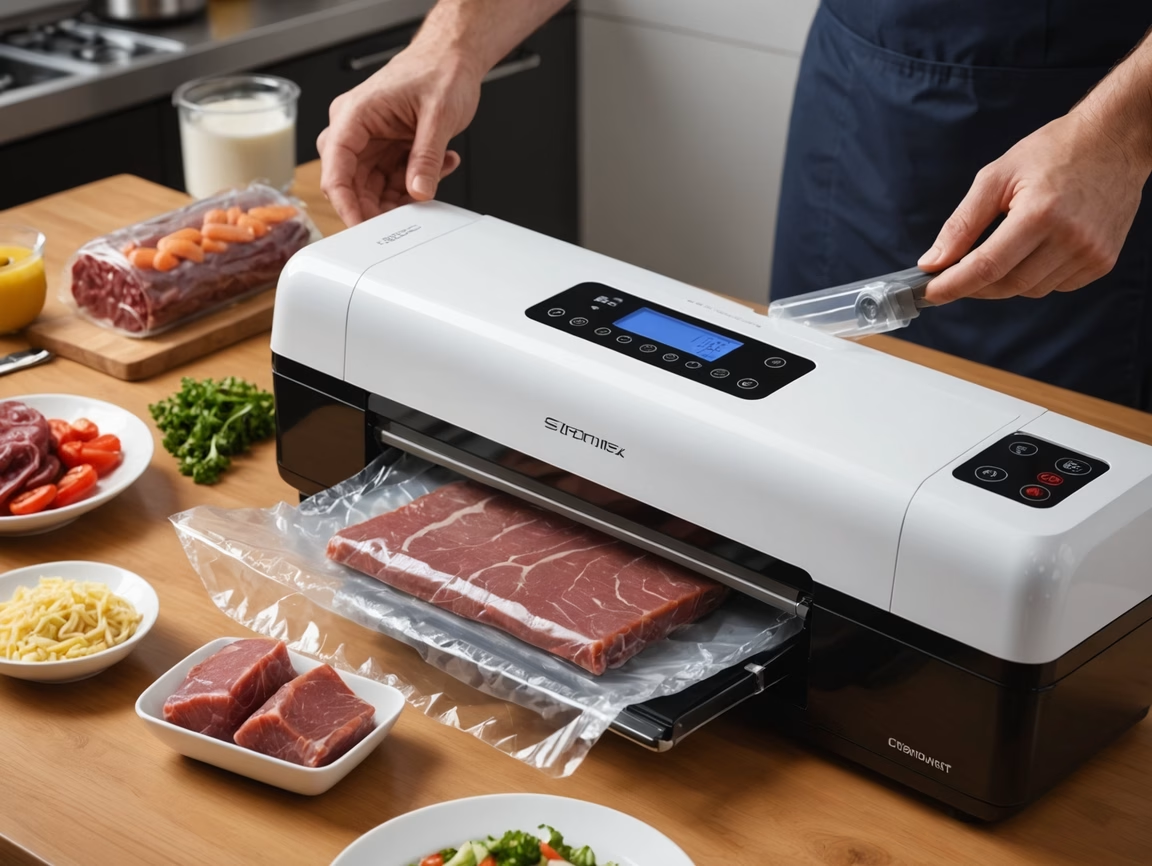












Embossing is not decoration first. On bags used with an external suction vacuum sealer, the textured channels keep an air path open while the bag collapses around the product. If that path is weak or incompatible with the machine, a visually distinctive bag can still perform badly.
For most buyers, an established diamond, grid, or dotted pattern is the sensible starting point. A pattern variant should be considered only after the machine, bag size, film, and product have been defined.
Confirm the Sealing Method
External suction machines normally require an embossed channel bag. Chamber machines evacuate the whole chamber and can generally use smooth pouches, so a textured bag may add cost without solving a problem.
Before comparing patterns, identify the exact sealer, usable bag width, expected product shape, and whether the product is dry, moist, sharp, or irregular. Read the embossed-bag compatibility guide before selecting a film.
What a Pattern Can Change
Pattern geometry, channel depth, film gauge, and bag stiffness work together. They can influence how readily air moves toward the open end of an external-sealer bag and how the surface looks in retail use. They do not guarantee a fixed vacuum level, sealing speed, or product shelf life.
Large or irregular products may behave differently from a small dry pouch. A pattern that works well on one machine can perform differently on another because suction design, seal timing, and bag placement all matter.
What an Embossing Cylinder Is
Embossing is formed by heated, engraved rollers—often called embossing cylinders or embossing rolls—during film conversion. The cylinder defines the channel geometry that appears in the bag. A custom cylinder is a tooling project, so its cost, lead time, ownership, maintenance responsibility, and replacement terms should be clear before artwork is approved.
Tooling cost varies materially with cylinder size, pattern complexity, supplier, and production route. Treat it as a quoted, one-time project cost rather than relying on a catalogue estimate. A later pattern change can require new or revised tooling, which is why custom embossing normally carries a higher commercial threshold than a standard pattern.
Key Design Parameters
Channel depth affects the available air path and the appearance of the film. Channel width and spacing influence the continuity and direction of that path. Pattern repeat length affects how the texture looks across the pouch. Surface coverage describes how much of the film carries the pattern and can affect feel, material use, and processing.
These parameters work together. A deeper or denser pattern is not automatically better: it may change stiffness, appearance, sealing-margin behaviour, material yield, or factory feasibility. Ask the supplier to propose a workable range for the selected film and to confirm it by sample.
Pattern Types and Their Characteristics
Diamond patterns provide intersecting diagonal paths and are widely used for external-suction bags. Grid or dot patterns provide repeated crossing or point-based channels. Hexagonal and other geometric formats may be used where a particular appearance or channel layout is requested. A fully custom geometric pattern can support a retail identity, but also adds design and tooling complexity.
Choose the pattern around the air path, bag size, product shape, machine, and required appearance. Do not select it solely from a flat artwork image.
How Pattern Affects Vacuum Performance
The practical question is air-flow resistance: whether air can move from the product area to the suction point without the pouch collapsing too early. Channel continuity, direction, depth, width, coverage, film stiffness, bag length, and the product all contribute.
Custom development is most defensible when there is a defined compatibility issue, a very large or unusual bag, an automated packing process, or a documented retail requirement. Standard patterns remain the right answer for many programmes because they are easier to sample, source, and reorder.
Choose the Simplest Working Option
Use a standard pattern when it seals reliably on the target equipment and meets the product’s handling needs. It is easier to sample, compare, and reorder. Branding is often better achieved through printed artwork, carton design, labels, or a controlled color treatment than through an untested texture change.
Consider a pattern variant only when there is a defined reason: a compatibility issue with the target machine, a specific bag size or product geometry, or a documented retail requirement. Describe the issue in the RFQ and ask the supplier what can be made and sampled on the proposed film.
The Custom Design Process
A practical sequence is: brief the supplier on machine, product, dimensions, and visual requirement; review proposed channel concepts; approve artwork or CAD; agree the prototype or first sample route; test it on the actual application; then release production tooling and the production run only after written approval.
Tooling and sampling schedules vary. Build time for artwork review, cylinder manufacture, sample delivery, testing, approval, and any revision into the launch plan. Do not promise a standard production timetable before the selected factory confirms it.
Cylinder Life and Durability
Embossing cylinders are precision tools and can wear over repeated production. Wear may appear as shallower texture, inconsistent channel formation, or a weaker visual pattern. The rate depends on the cylinder material, pattern, film, production conditions, and maintenance.
For a repeat programme, agree how pattern quality will be monitored, what approved reference will be used, and what happens if the tooling is refurbished or replaced. This avoids treating a later pattern variation as a mystery bag-quality issue.
Test With the Real Product
Evaluate samples on the intended sealer with the intended bag size and product. Check whether the bag evacuates consistently, whether the seal area remains clean, whether the channels remain usable during normal handling, and whether the appearance matches the retail requirement.
Do not approve a production change based on a flat film swatch or a bag tested only empty. Record the machine, program, product, and result so the approved sample can be repeated on later orders.
Testing Before Full Production
Before a full-MOQ run, assess evacuation with the actual product, seal appearance and strength after cooling, channel behaviour during normal handling, pouch appearance, carton presentation, and storage or transport conditions relevant to the programme. A prototype or small paid run can be far less costly than discovering a problem after a full customised order.
Balancing Performance and Cost
A simple modification to a proven pattern is generally easier to develop than an artistic or highly complex design. The commercial comparison should include tooling, sample cost, film yield, expected order volume, production lead time, and the value the pattern adds to the product—not only the unit price.
The right design is normally the simplest pattern that meets the air-path and brand requirement. Extra complexity should solve a stated performance or retail problem.
When Custom Embossing Makes Sense
Custom embossing is most appropriate when there is a clear functional optimisation need, a meaningful visual differentiation requirement, and a volume plan that can reasonably absorb the tooling and approval work. For routine bags with no defined problem, a standard pattern is usually the lower-risk choice.
Turn the Result Into a Clear Specification
The final brief should state the bag type, finished dimensions, gauge or film structure if known, pattern reference, target machine, intended use, print/packing requirements, destination market, and required sample. If a pattern depth or variant is requested, treat it as subject to factory feasibility and sample approval rather than as an assumed standard offering.
VANTASE supports B2B customization of dimensions, gauge, print area, and packing format, with pattern options reviewed against the sealer and application. Compare diamond-pattern bags with transparent embossed bags, or contact VANTASE with the machine and product details.