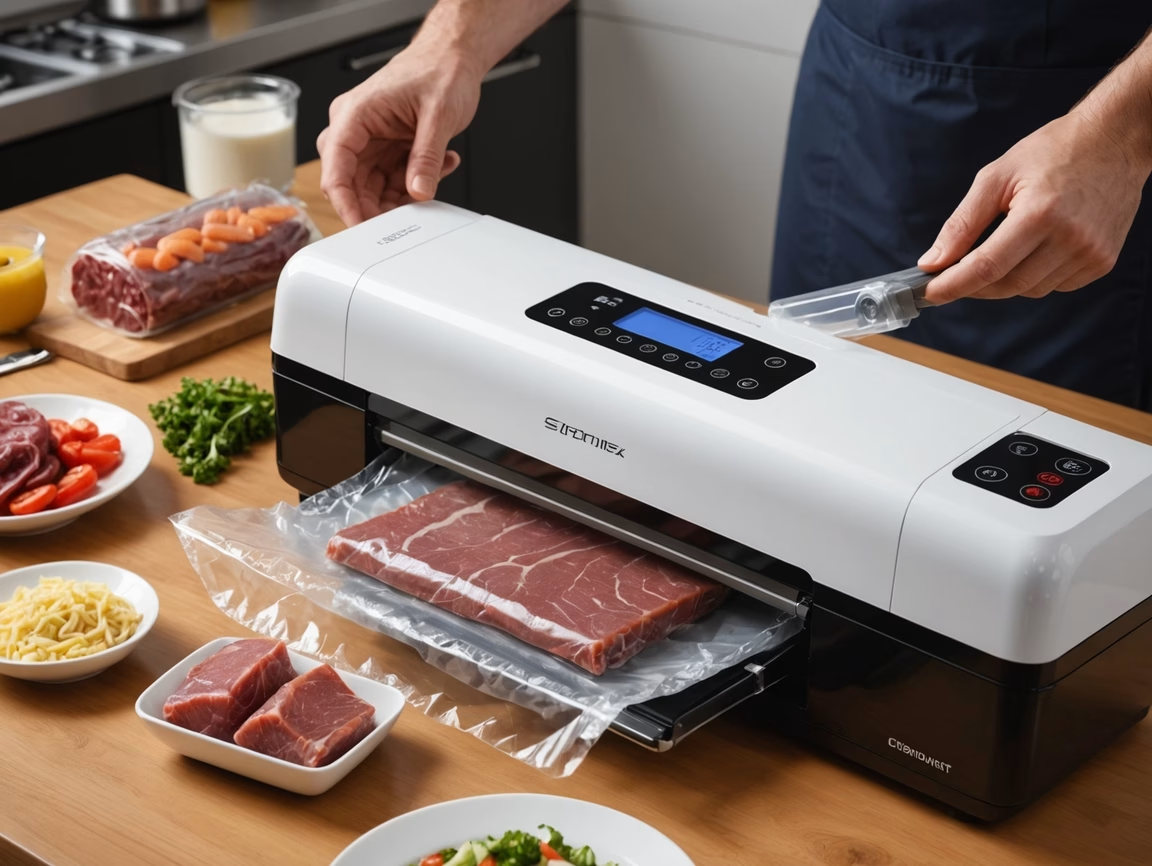












Why Vacuum Sealing Actually Extends Food Shelf Life (And When It Doesn’t)
Vacuum sealing is often treated as magic—put food in a bag, suck out the air, andkeep it fresh forever, right? Not quite. Understanding the actual science behind vacuum sealing’s shelf life extension helps you use it correctly and avoids the disappointment of opening a bag of spoiled food you were sure would be fine. Pair this guide with what vacuum sealer bags are made of when choosing film.
The Oxygen Problem
Most food spoilage is driven by oxygen. Three things happen when food meets oxygen: oxidation, microbial growth, and moisture loss. Remove oxygen, and you slow all three processes dramatically—this is the same principle behind how a vacuum sealer works.
Oxidation is what turns cut apples brown and makes butter rancid. In meat, oxygen binds to myoglobin and changes the color from the bright red consumers expect to an unappetizing brown. In oils and fatty foods, oxidation creates rancidity—off flavors that make food unpleasant or even unsafe to eat.
Microbial growth is another major spoiler. Many common spoilage organisms need oxygen to grow, so reducing air can support quality retention. The result depends on the product, pouch, seal integrity, temperature, and handling, however, and should not be expressed as one universal shelf-life multiplier.
What Vacuum Actually Removes
Machine pressure readings depend on the measurement reference and test conditions. They cannot be converted reliably into one residual-oxygen percentage for every filled pouch. Compare the machine, compatible bag, product, and seal result together; see vacuum pressure explained.
Temperature: The Critical Variable
Vacuum sealing and refrigeration are partners, not substitutes. At room temperature, vacuum-sealed foods still degrade relatively quickly. Bacteria that cause food poisoning (Salmonella, E. coli, Listeria) can grow slowly even in vacuum conditions at room temperature. Always refrigerate vacuum-sealed foods.
Even in refrigeration, temperature matters enormously. Follow the product’s labelled storage instructions and applicable food-safety guidance; vacuum packaging does not create a new universal refrigerated-storage schedule.
The initial temperature of the food when you seal it matters too. Warm food sealed in a bag creates condensation inside the bag during cooling—that moisture is exactly what microbes need to grow. Always cool food to refrigerator temperature before vacuum sealing, or use it immediately after cooking and sealing if you’ll be freezing.
Real Shelf Life Decisions
There is no responsible one-size-fits-all table for meat, cheese, pasta, berries, or coffee. A shelf-life decision needs the product’s initial condition, formulation, processing, pouch structure, seal integrity, temperature history, and the applicable local requirements. Vacuum packaging can support quality retention, but it does not replace that validation.
For a practical trial plan, keep the product categories separate rather than applying one number across the range:
- Fresh proteins and ground meat: Validate against the cold chain, hygiene controls, pack leakage, and the local product requirement.
- Hard cheese and cooked foods: Check product quality, surface moisture, and the intended refrigerated holding process.
- Fresh pasta and berries: Use a gentle vacuum setting where crushing or moisture release is a concern, then assess appearance and texture during the intended storage period.
- Coffee beans and high-fat foods: Assess aroma and oxidation over time; the bag’s barrier structure can matter as much as the machine setting.
This approach preserves the useful comparison between products without turning a general blog post into an unsafe expiry-date instruction.
The Vacuum Sealing Doesn’t Kill Bacteria Problem
This is critical: vacuum sealing preserves food—it doesn’t make it safe if it was already compromised. If you seal food that already contains harmful bacteria at unsafe levels, vacuum sealing will slow those bacteria but won’t eliminate them. The bugs just grow slower, which can actually make things worse by delaying signs of spoilage.
Always start with fresh, high-quality food. Vacuum sealing is not a fix for food that was already going bad.
Seal Integrity: The Weak Link
A perfect vacuum in a compromised bag is worthless. The seal is the integrity of the entire system. A seal that fails even partially—minutes after sealing or weeks later in the freezer—introduces oxygen and moisture to your preserved food. See single seal vs double seal bags when evaluating pouch construction.
Test your seals. Before filling a bag, make a test seal and check it. After vacuum sealing, inspect visually. When in doubt, re-seal. In commercial settings, a random sample pull test—measuring seal strength with a calibrated pull tester—catches problems before they become customer complaints.
The Freezer Burn Factor
One of vacuum sealing’s underappreciated benefits is preventing freezer burn. Freezer burn happens when moisture sublimates from food surfaces exposed to dry freezer air. In a conventional freezer bag with some air trapped, this moisture loss creates the characteristic dry, discolored patches. In a properly vacuum-sealed bag using embossed film for external sealers, there’s no air space for moisture to escape into, so freezer burn doesn’t occur.
Best Practices for Maximum Shelf Life
To get the maximum benefit from vacuum sealing: always start with food at refrigerator temperature or colder; remove as much air as your equipment allows; make strong, complete seals; label everything with the sealing date; store at the appropriate temperature; use within the expected shelf life window; and when in doubt, throw it out. If seals fail repeatedly, review common vacuum sealing problems.