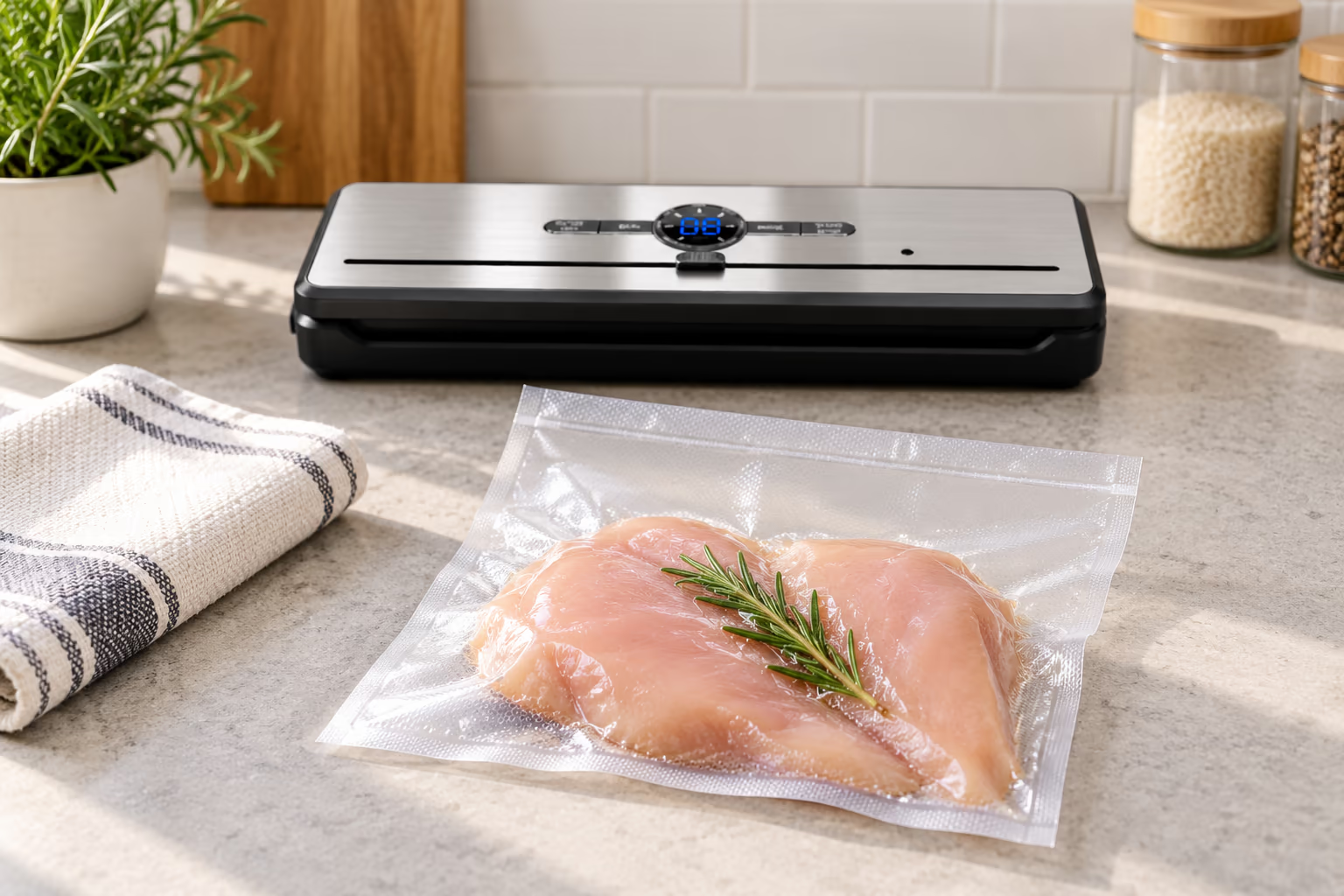
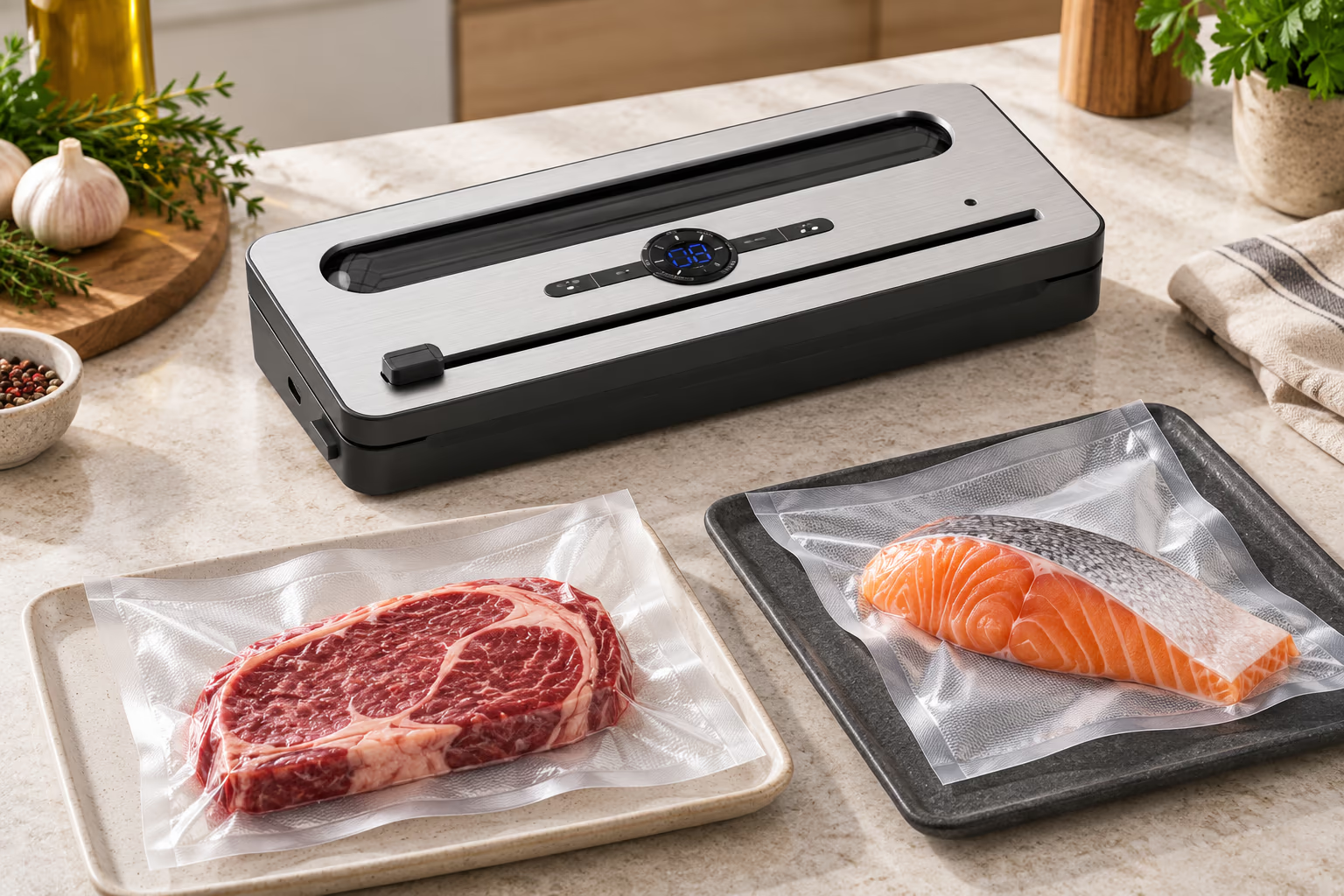
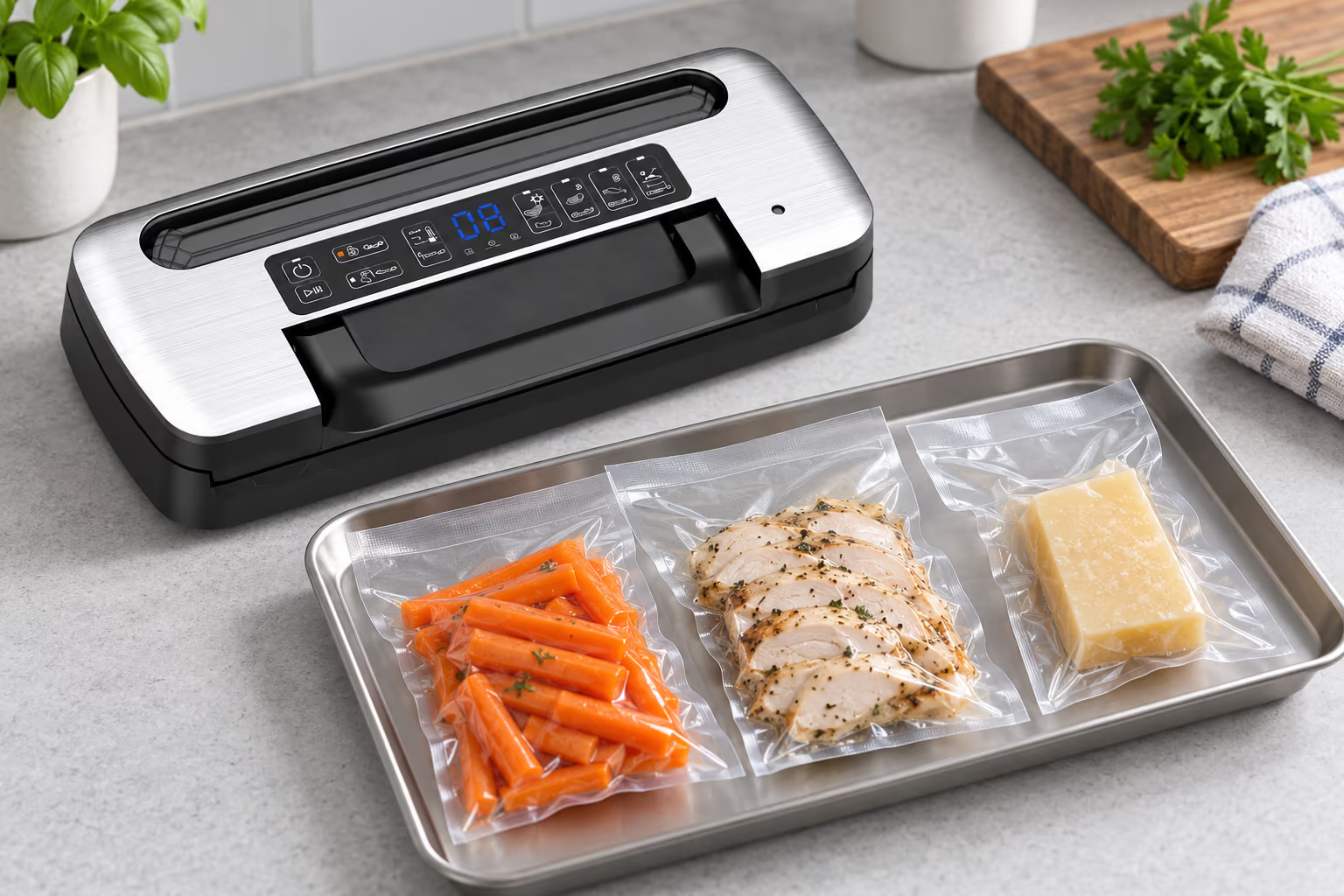
Restaurants, caterers and central kitchens use vacuum sealers to organize portioning, packing, storage and service preparation. The benefit comes from a repeatable workflow with the right machine and bag, supported by the kitchen’s food-safety controls. Removing air does not sterilize food or establish its shelf life.
The Economic Case: Food Cost Reduction
Vacuum sealing can support portion control and reduce avoidable handling loss. Compare purchasing cost, usable yield, bag consumption, labour and discarded portions before estimating a saving. There is no universal cost reduction or shelf-life multiplier.
Buying a whole cut and portioning it in-house can suit some menus, but the result depends on the supplier, usable yield, staff time and demand. Record the weight purchased, portions produced and waste. Packaging helps identify and manage portions; it cannot guarantee that all purchased food will be used before its approved storage limit.
Batch Cooking and Prep Efficiency
Plan preparation around the kitchen’s approved cooling, holding and service procedures. A batch of braised meat or marinated poultry can be divided into consistent portions, but the packaging schedule must fit the validated process. Do not infer that preparing a whole week’s meals is safe merely because the packs are vacuum sealed.
Record portion weight, batch, packing date and the assigned use-by limit. Arrange the refrigerator or freezer so staff can identify and rotate packs. Check cooling capacity and the time food spends out of temperature control. A tighter pack does not prove faster cooking or better quality.
Marinade Penetration
Vacuum sealing keeps marinade or brine in contact with the food. The effect on flavour and texture depends on the recipe, cut, thickness and contact time. Validate the result with the actual product instead of replacing an overnight marinade with a fixed shorter vacuum cycle.
Keep the sealing area clean and leave sufficient headspace. Liquid handling differs between chamber and external suction machines; follow the equipment manufacturer’s instructions and avoid drawing liquid into an unsuitable machine.
Meat, Poultry and Seafood Trials
Test poultry, beef, pork and seafood separately. Record cut size, recipe, holding conditions and the cooked result. Seafood needs particular attention to its handling controls. Packaging does not make different foods interchangeable or replace their approved temperature and storage requirements.
Bulk Purchasing and Whole-Product Utilization
Separate saleable portions, trim and bones, then label each intended use. Compare the actual yield of each purchased cut with the menu forecast. Do not apply a livestock live-weight yield to a prepared primal cut or assume a fixed percentage saving against retail prices.
Choose pack sizes that match use rates and available storage. Identify trim for an approved preparation route instead of allowing packaging to become a reason to keep it indefinitely. Traceability should connect the supplier lot, preparation batch and finished portions.
Catering Prep and Large Events
Pack components separately when this supports a clear preparation and assembly sequence. Build a dispatch list showing quantities, batch identifiers, storage conditions and destination. Confirm refrigerator, transport and on-site holding capacity before preparing ahead.
A sealed pack does not guarantee quality for a week or remove the need for temperature checks in transit. Validate the full route, including opening and finishing at the venue. Use packaging to reduce confusion, while retaining the same food-safety controls as the approved catering process.
Sous Vide Integration
Sous vide requires a controlled time-and-temperature process and a bag approved for the intended cooking conditions. Remove enough air for the chosen method, check seals and keep the pack positioned correctly in the bath. A vacuum sealer alone does not establish a safe cooking process.
Cooking, cooling, storage and reheating are separate steps. Staff must follow the validated instructions for each step rather than simply warming a sealed pack and serving it. Review vacuum sealing for sous vide for packaging considerations; obtain the process requirements from the applicable food authority and your food-safety plan.
Charcuterie and Cured Preparations
Vacuum packs may support handling and storage of cured products, but they do not validate curing, fermentation or pathogen control. Specify the recipe and process independently of the packaging, and confirm that the selected bag and equipment suit the product.
Do not promise faster curing or longer usable life solely from vacuum sealing. A finished product needs its own approved process, storage conditions and shelf-life evidence, including any local requirements for reduced-oxygen packaging.
The Daily Workflow
Schedule packing when the kitchen can keep food under its approved controls, whether during preparation or after service. Prepare bags and labels, inspect equipment, portion food, keep the sealing zone dry and clean, and seal according to the machine instructions.
Inspect each seal and allow the required cooling interval before handling. Label contents, batch and dates, transfer packs promptly to the assigned storage, and record exceptions. Keep raw and ready-to-eat handling routes separate; do not re-pack food to reset its approved use-by limit.
Commercial vs. Household Machines
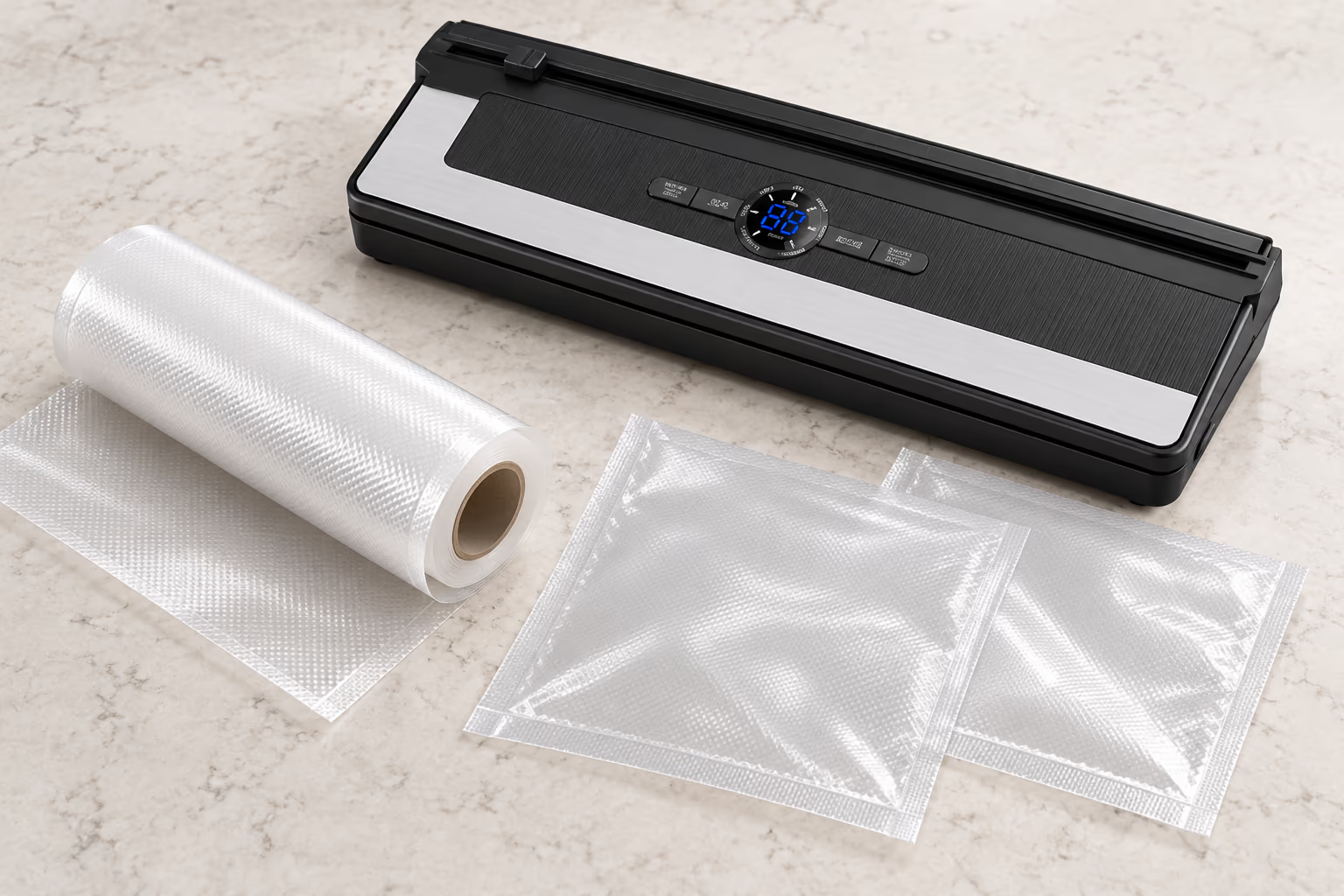
Compare required cycles, pauses for cooling, usable bag or chamber dimensions, seal width, liquid handling, cleaning access and maintenance. A chamber machine may suit liquids and repeated production, while an external suction machine normally needs embossed bags. See external vs. chamber vacuum sealers.
Confirm throughput with the actual portion and bag in a sample trial. Machine price or housing material alone does not establish duty cycle, and an equipment category does not guarantee service life. Request the supplier’s operating limits and service arrangements before ordering.
Staff Training
Train staff to match bag type to machine, keep food away from the seal, inspect seams, label consistently and follow storage instructions. Cover cleaning, cross-contamination control, safe liquid handling and the equipment’s cooling pauses.
Assign a response for leaks, damaged packs, missing labels or temperature deviations. Food-safety decisions belong to the approved process, not to a visual judgement that a pack still looks tight. Review training when the recipe, bag, equipment or service route changes.
Bag Selection and Supplier Inquiries
For external suction equipment, compare transparent embossed bags and vacuum rolls. Confirm food-contact suitability and, where relevant, the cooking temperature and duration with the supplier. Reusable zipper valve storage bags are a different format: do not treat them as heat-seal cooking pouches or assume suitability for every restaurant application.
Send the machine model, packed product, portion dimensions, liquid content, intended storage or cooking conditions and daily pack quantity through contact. This allows a bag and sample trial to be specified against a real workflow.
Food-Safety Reference
The FDA Food Code 2022 is a reference for US retail and foodservice controls, including reduced-oxygen packaging. Requirements differ by jurisdiction; confirm the applicable rules, any approval requirements and your validated food-safety plan before use.