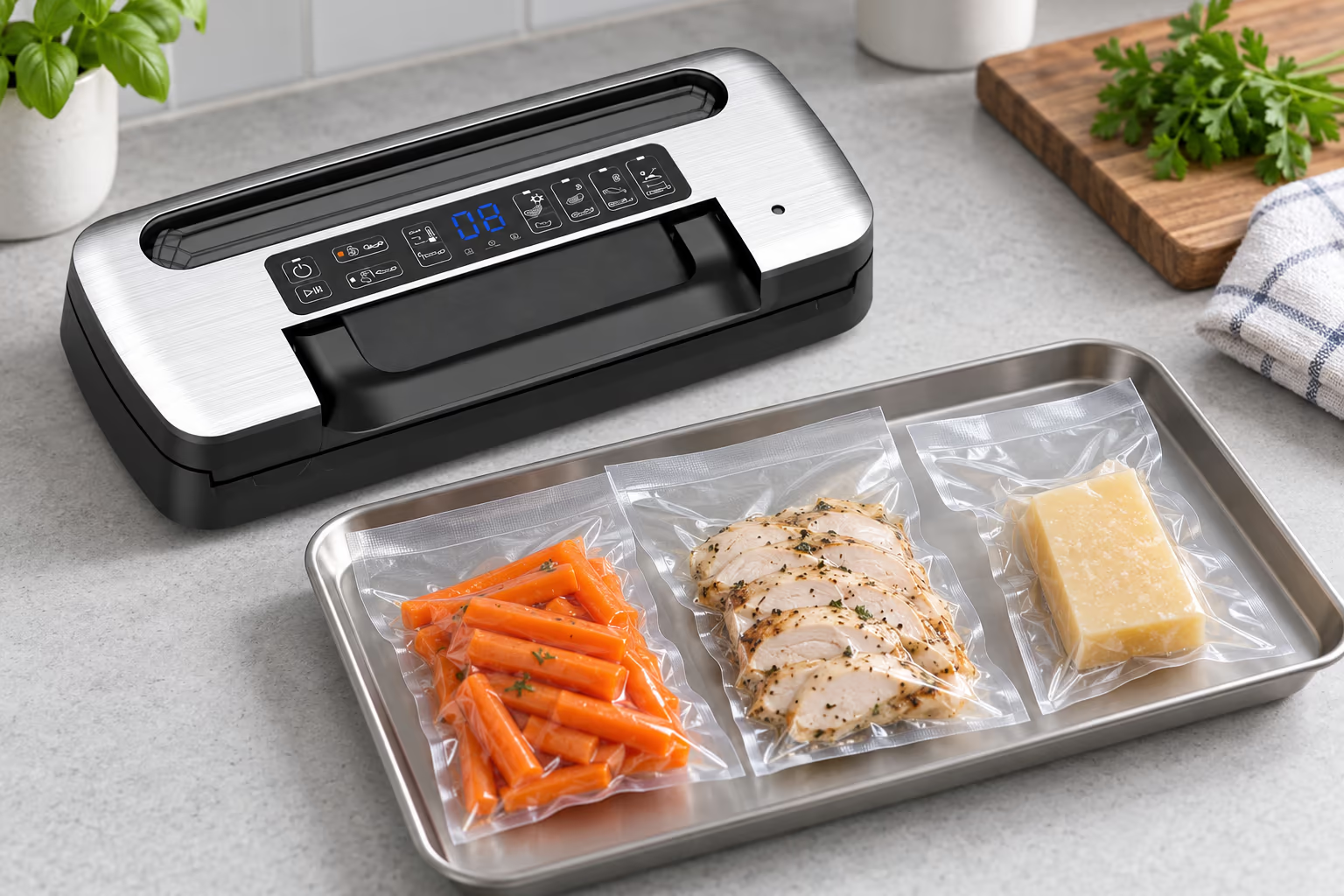
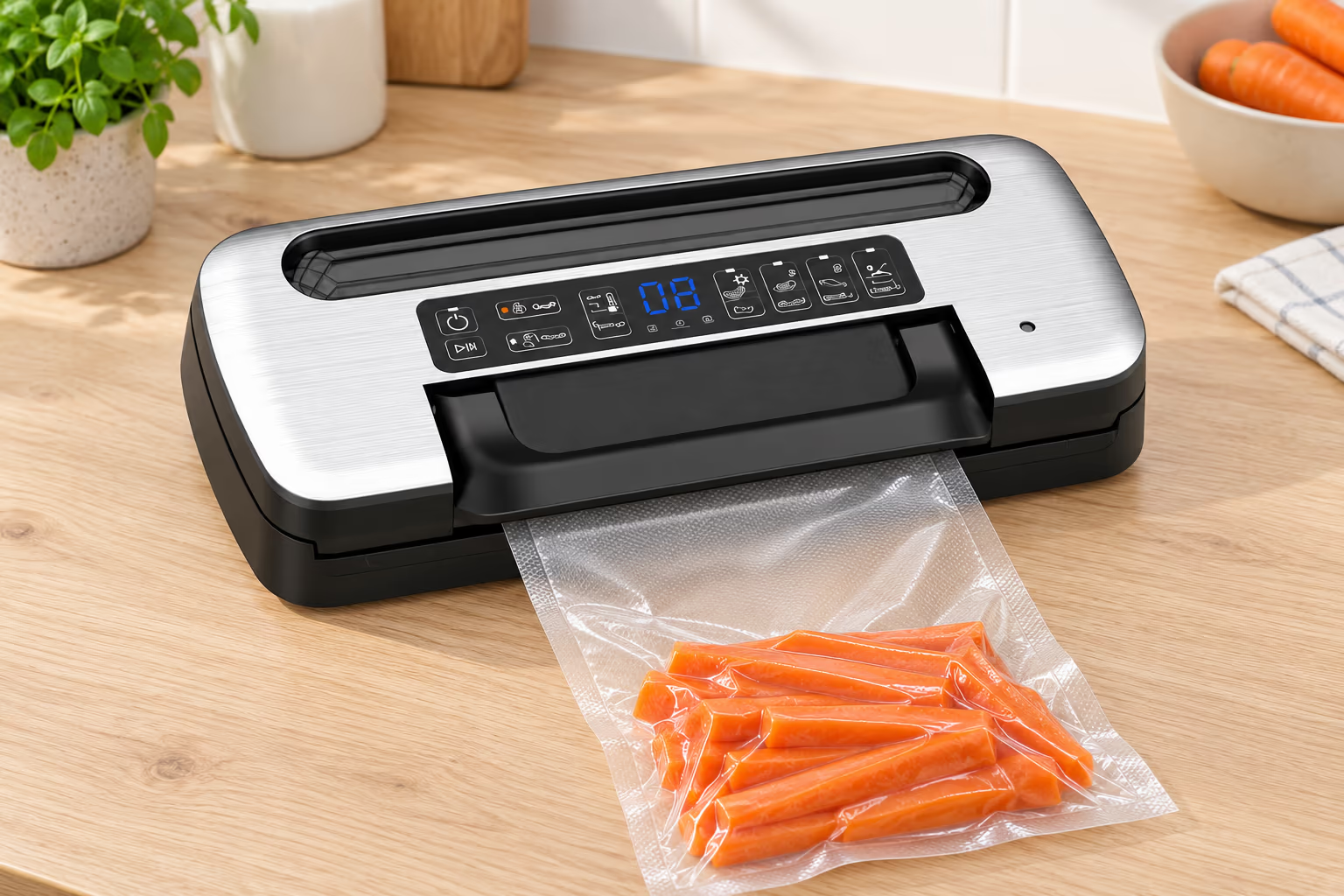
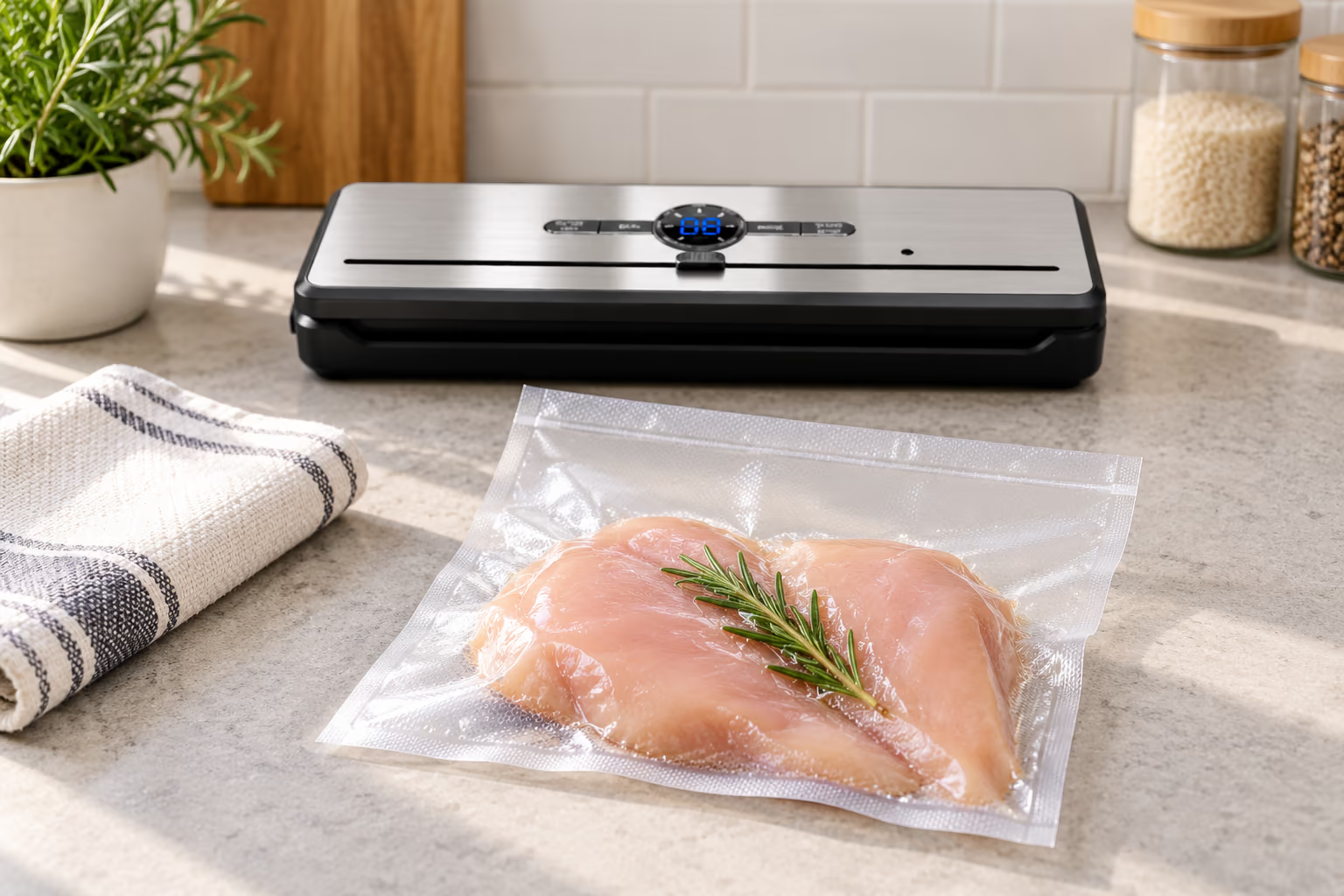
Choose a vacuum bag in this order: machine compatibility, usable size, product protection, food-contact conditions and packing format. Price and overall thickness only become useful comparisons after those requirements match. A bag that fits the seal bar may still block air removal, seal poorly or be unsuitable for the intended cooking conditions.
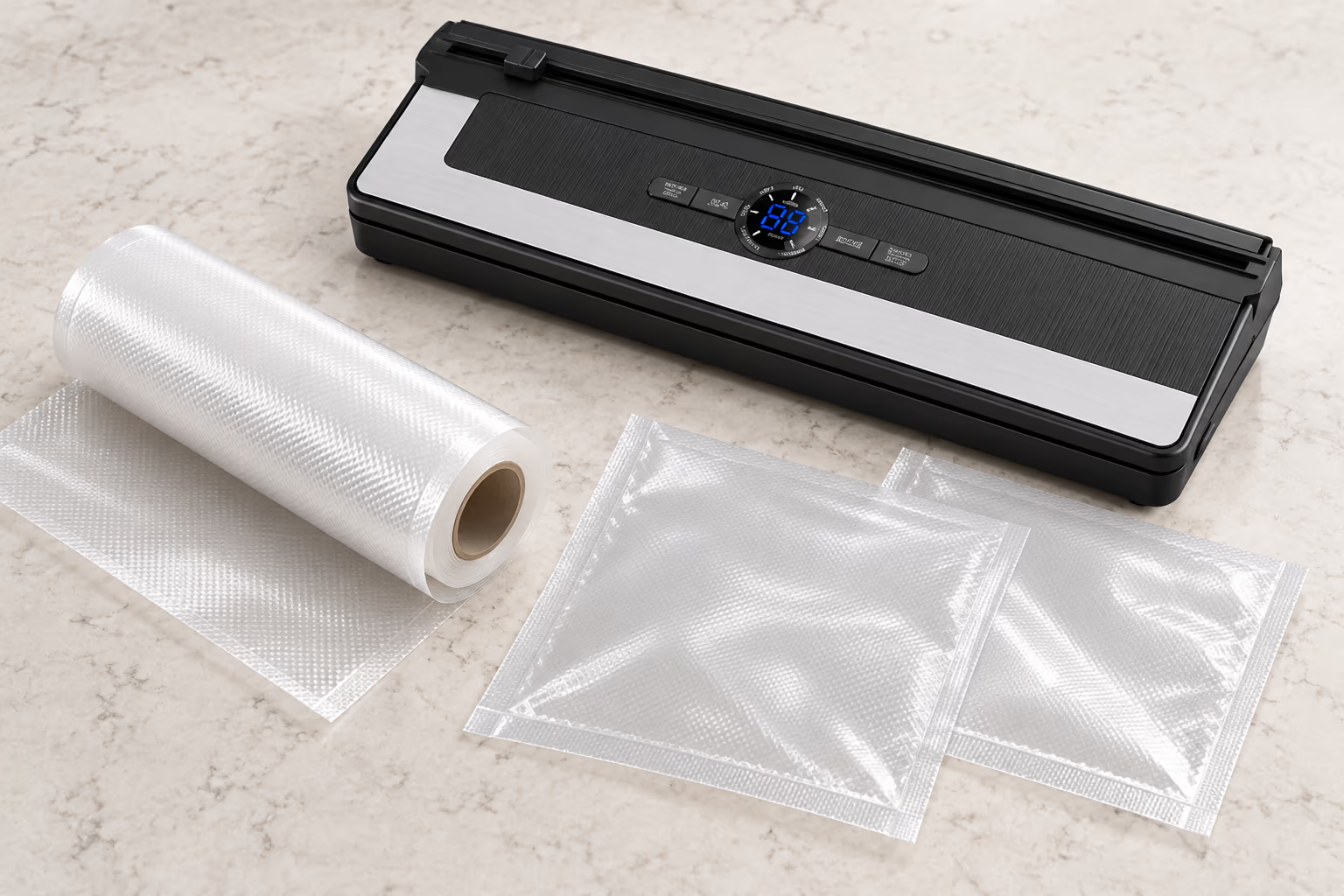
Question 1: Which Bag Format Does the Machine Use?
Read the manual and identify how the pouch connects to the vacuum path. On a channel-type external sealer, the food stays outside while the open mouth enters a vacuum channel under the lid. On a chamber machine, the whole pouch sits inside the sealed chamber with its mouth open until sealing. A visible seal bar or hose socket alone does not establish machine type.
| Machine design | Typical package | What to confirm |
|---|---|---|
| Channel-type external sealer | Embossed or channelled heat-seal pouch | Texture, usable mouth width and sealing-layer compatibility |
| Chamber sealer | Smooth chamber pouch | Chamber clearance, seal-bar layout and pouch material |
| Nozzle-type external sealer | Format specified for the nozzle system | Nozzle loading and smooth-film compatibility, if supported |
| Handheld valve system | Compatible valve bag or container | Valve design, closure and permitted reuse |
Do not identify a machine by testing whether an unknown smooth bag appears tight. Some nozzle designs handle smooth film, and a failed seal can have other causes. Compare the VATA22 and other vacuum sealers using their own instructions.
Why Many External Sealers Need Embossing
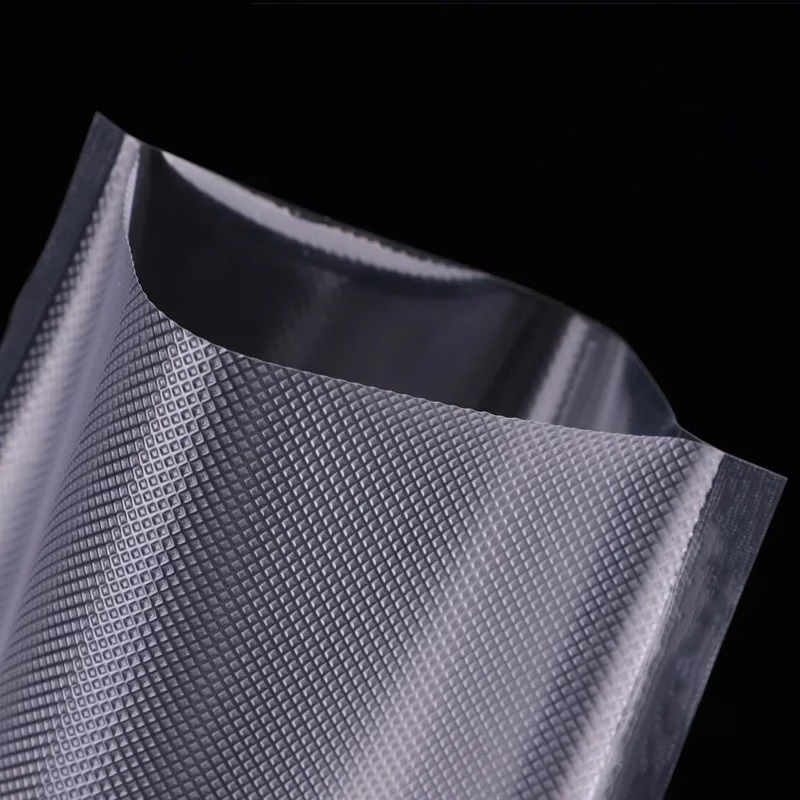
Two smooth inner film surfaces can press together and close the air path before the pouch has emptied sufficiently. Embossed passages help air travel from the food toward the open mouth and vacuum channel. The texture is functional, not proof of higher barrier performance or cooking suitability.
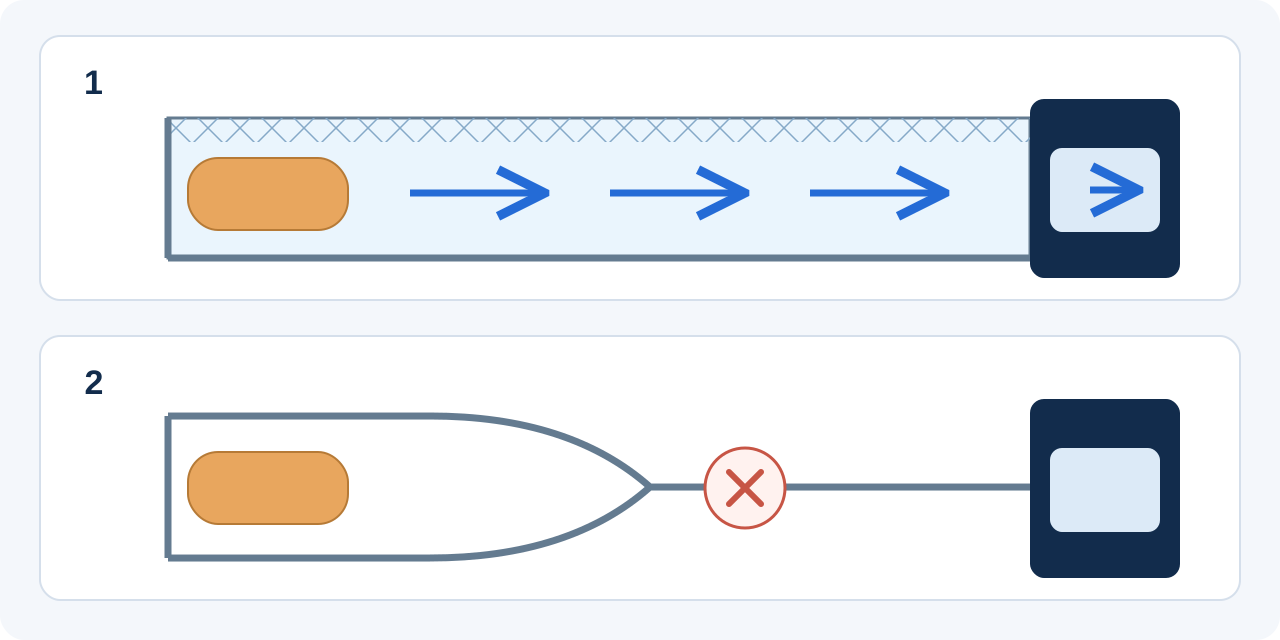
Chamber pouches normally do not need these channels because pressure falls around the open pouch as well as inside it. Compare embossed and smooth bags by the intended machine, structure and quoted cost. There is no fixed percentage by which smooth bags are always cheaper.
Question 2: What Size Actually Fits?
Use the model’s maximum usable pouch-mouth width, not the overall appliance width. For a chamber machine, also check chamber height, product clearance and where the bag mouth must lie across the seal bar. Do not assume all countertop sealers accept the same 11- or 12-inch pouch.
Allow enough room for the product and the empty neck required by the manual. A pouch that is too narrow can stretch around the food, pull wrinkles into the mouth or leave no clean sealing area. An unnecessarily large pouch can increase film use and handling time. Width, length, gussets and quoted measurement conventions should all be clear before comparing suppliers.
Load a representative product sample rather than measuring a flat piece of food alone. Sharp corners, a bulky joint or multiple portions can change the required size. Keep the full pouch mouth flat within the usable sealing area.
Question 3: Which Film Structure and Thickness Suit the Product?
Select protection from sharp edges, product weight, handling, storage conditions and required barrier performance. Overall thickness is only one specification. Layers have different jobs: a sealing layer must join reliably, while other layers may contribute strength or barriers to oxygen and moisture.
PA/PE and PA/EVOH/PE describe example layer combinations, not guaranteed performance grades. Ask for the relevant film specification, thickness convention and barrier data under stated test conditions. There is no universal micron band that suits all meat, all frozen food or all industrial items. See thickness and performance and vacuum-bag materials.
For bone-in products, evaluate a suitable protective guard and filled-pack puncture trials. For soft food, check whether the bag and programme allow adequate air removal without unacceptable crushing. Do not compensate for a poor fit by choosing a thicker film alone.
Question 4: Is the Pouch Documented for This Food and Use?
Ask for food-contact documentation matching the destination market, food type, contact time and temperature. A generic food-grade claim or an unexplained certificate does not establish all of those conditions. Bags sold for non-food industrial use should not be assumed suitable for food.
Freezer use, refrigeration, microwave heating and sous vide are different conditions. Check each intended use explicitly. A pouch suitable for cold storage may be unsuitable for a long cook. For cooking, request the allowed time–temperature conditions and any restrictions on foods or handling. Use the sous vide packing guide for the workflow questions.
Regulatory documentation varies by market and material. The European Commission overview of food-contact materials is one jurisdiction-specific starting point; it is not a universal certification scheme for every market. Confirm applicable requirements with the supplier and a qualified reviewer where needed.
Question 5: Premade Pouches or Rolls?
Premade pouches normally arrive with three sides closed and one open end to fill and seal. They suit repeated sizes and reduce preparation steps. Check quoted internal dimensions and seal layout, especially when product clearance is tight.
Tubular bag rolls let you choose a cut length within the roll width and machine limits. First make the bottom seal, allow it to set, then load the food and complete the final seal. That extra seam and handling step belong in the cost and quality comparison. A roll cannot provide unlimited width or bypass the sealer’s capacity.
Third-party bags may be usable when the manual allows them and the format, sealing layer and documented use conditions match. Do not promise that all compatible-looking bags perform identically. Sample trials matter more than brand assumptions.
Test Before Ordering in Bulk
Trial the actual filled pouch using the intended programme. Check air removal, a complete cooled seam, film damage and performance after the planned freezing, cooking or distribution conditions. Visual tightness is useful observation but does not prove residual oxygen, leak tightness or safe shelf life. Use appropriate acceptance tests for the application.
Keep the same product and settings when comparing films, then change one variable at a time. Compare total cost per acceptable finished pack, including preparation, rejected packs and handling. Send VANTASE the five answers, machine model and representative sample requirements before ordering production quantities.