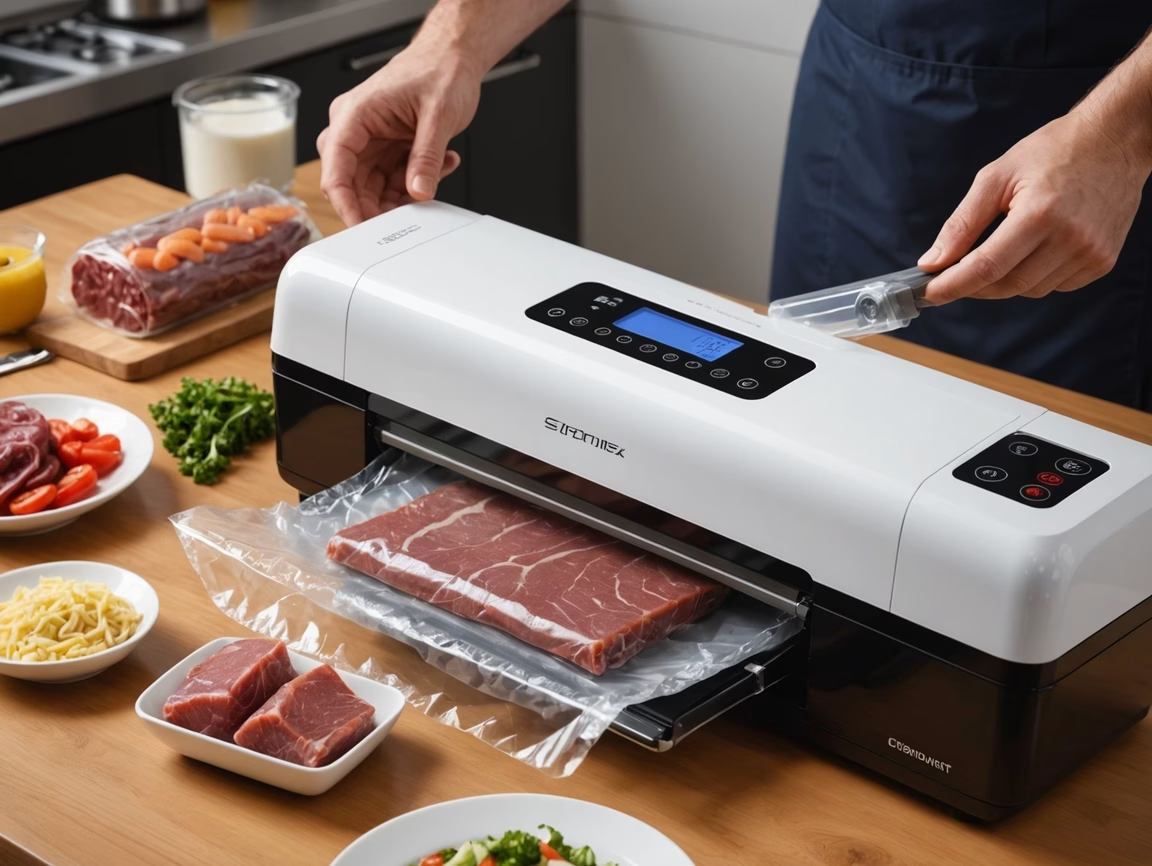












If you’ve ever pulled a sealed bag out of the freezer a week later only to find it opened during storage, the problem might not be your machine, your bags, or your sealing technique. It might be that you didn’t give the seal enough time to cool before handling. Cooling time is one of the most overlooked factors in creating reliable vacuum seals, and understanding why it matters helps you avoid a frustrating class of failures.
What Happens During Sealing
When the sealing wire activates, it heats the polyethylene inner layer of the vacuum bag to temperatures around 180C to 220C. At this temperature, the PE becomes a viscous liquid that flows and fuses when the two sides of the bag are pressed together. The heat and pressure create a molecular bond between the two PE layers.
But here’s the critical point: as soon as the heating wire shuts off, the PE layer is still hot and soft. It looks solid, and from a distance, it seems like the seal is complete. However, the plastic hasn’t yet undergone its crystallization phase—the process where the molecules arrange into a stable, ordered structure that gives the seal its mechanical strength.
Cooling is when the seal actually becomes strong. Heating is just the setup.
The Crystallization Process
Thermoplastics like polyethylene don’t solidify the way water freezes—abruptly at a specific temperature. Instead, they transition through a gradual crystallization process as they cool. During this phase, the plastic molecules slowly arrange into a tighter, more ordered structure. The seal gains strength progressively as this crystallization proceeds.
At full crystallization, the seal reaches its rated strength. But if you stress the seal during the cooling phase—before crystallization is complete—you can disrupt the molecular alignment and weaken the bond permanently.
What Insufficient Cooling Causes
If you handle or stack bags immediately after the sealing cycle completes, you apply mechanical stress to a seal that’s still in its formative cooling phase. The stress can:
Cause micro-delamination: The two PE layers, not yet fully fused, partially separate at the interface. The seal looks complete but has reduced integrity.
Create stress fractures: Mechanical pressure during cooling creates microscopic cracks in the partially-crystallized material. These become failure points under long-term storage stress.
Result in immediate seal opening: In severe cases, the seal may actually open completely during handling because it hasn’t gained sufficient strength.
Most often, the damage is subtle—enough to reduce seal strength without causing immediate failure. The seal holds initially, but under the stress of long freezer storage, thermal cycling, or physical handling, it fails later. This is why seal failures from insufficient cooling often appear days or weeks after sealing, with no obvious cause.
How Long Is Enough?
Modern vacuum sealers with active cooling fans typically specify 2-5 seconds of cooling time after the sealing cycle. The cooling light (or indicator) signals when the seal has reached sufficient temperature to handle safely. If your machine has this indicator, wait for it before touching the bag.
For machines without active cooling or with passive cooling only, wait at least 5 seconds after the cycle completes. For thicker bags (100μm and above), extend this to 7-10 seconds. When in doubt, wait longer—there’s no penalty for giving the seal extra time to cool.
For stacking bags immediately after sealing, wait at least 30-60 seconds. The weight of other bags adds pressure that stresses seals that haven’t fully crystallized.
Temperature Effects on Cooling
Ambient temperature affects cooling time. In a cold environment (refrigerated spaces, cold warehouses), the seal cools faster and may need less time. In hot environments, cooling takes longer. If your sealing environment is significantly warmer or cooler than room temperature (20-25C), adjust cooling times accordingly.
Bag thickness also matters significantly. Thick bags (120μm+) have more thermal mass and cool more slowly. They also require higher sealing temperatures, meaning more residual heat when the sealing wire shuts off. Plan for 30-50% longer cooling times with heavy commercial bags.
The High-Volume Operations Problem
In commercial kitchens running hundreds of vacuum sealing operations daily, the temptation to maximize throughput by minimizing cycle time is strong. Reducing cooling time to squeeze out a few extra cycles per hour is a false economy.
The cost of even occasional seal failures—product loss, food safety risk, customer complaints—far exceeds the marginal throughput gained from shortened cooling times. Train staff to wait for cooling indicators. Build cooling time into standard operating procedures.
For truly high-volume operations, consider machines with active cooling systems that accelerate the crystallization process, allowing faster cycling without sacrificing seal quality.
Cold Storage Effects
Seals that are still warm when placed in a freezer may experience thermal shock from the sudden temperature drop. The outer layers of the bag cool and contract faster than the inner PE layer, creating internal stress at the seal interface. While usually not catastrophic, this stress adds to the mechanical loading on a seal that may not have fully crystallized.
Best practice: allow seals to cool at room temperature for the specified time before placing in freezer storage. This is especially important for seals on thick bags or bags sealed in hot environments.
A Simple Quality Control Check
To verify your cooling times are adequate, do a periodic stress test: seal a bag with water or another safe content, let it cool for your standard time, then freeze it for 48 hours. After thawing, check the seal. Any signs of leakage or weakening indicate insufficient cooling time or seal strength.
Doing this test weekly with a sample from each batch of bags gives you ongoing quality assurance without significant effort.
The Bottom Line
Cooling time isn’t optional or optional optimization—it’s fundamental to seal integrity. A seal that hasn’t cooled sufficiently is a seal waiting to fail. The machine’s cooling indicator exists for a reason. The specified cooling times exist for a reason. Respect them, and your seals will hold reliably for months in storage. Shortcut them, and eventually you’ll pay for it with failed bags and lost product.