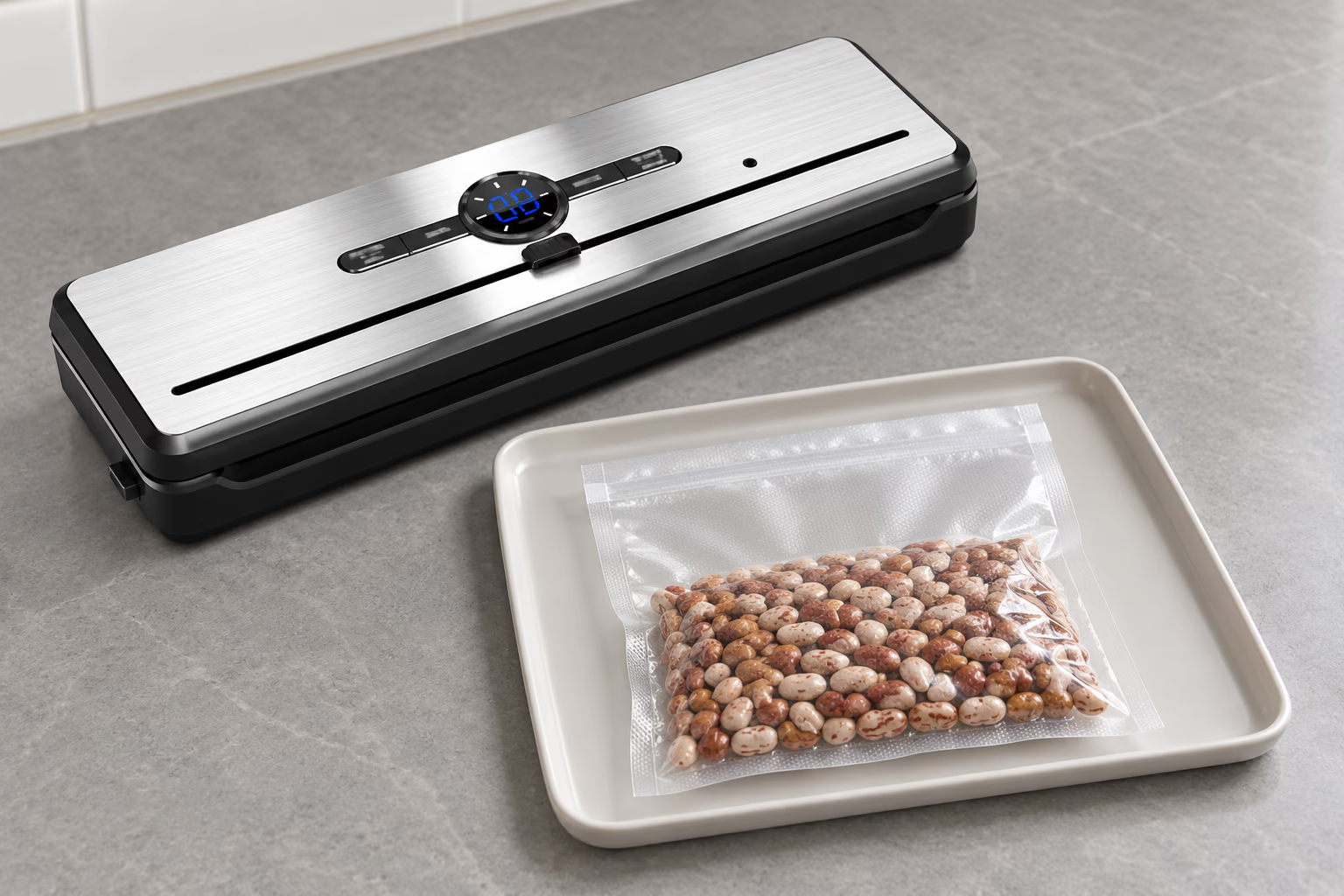
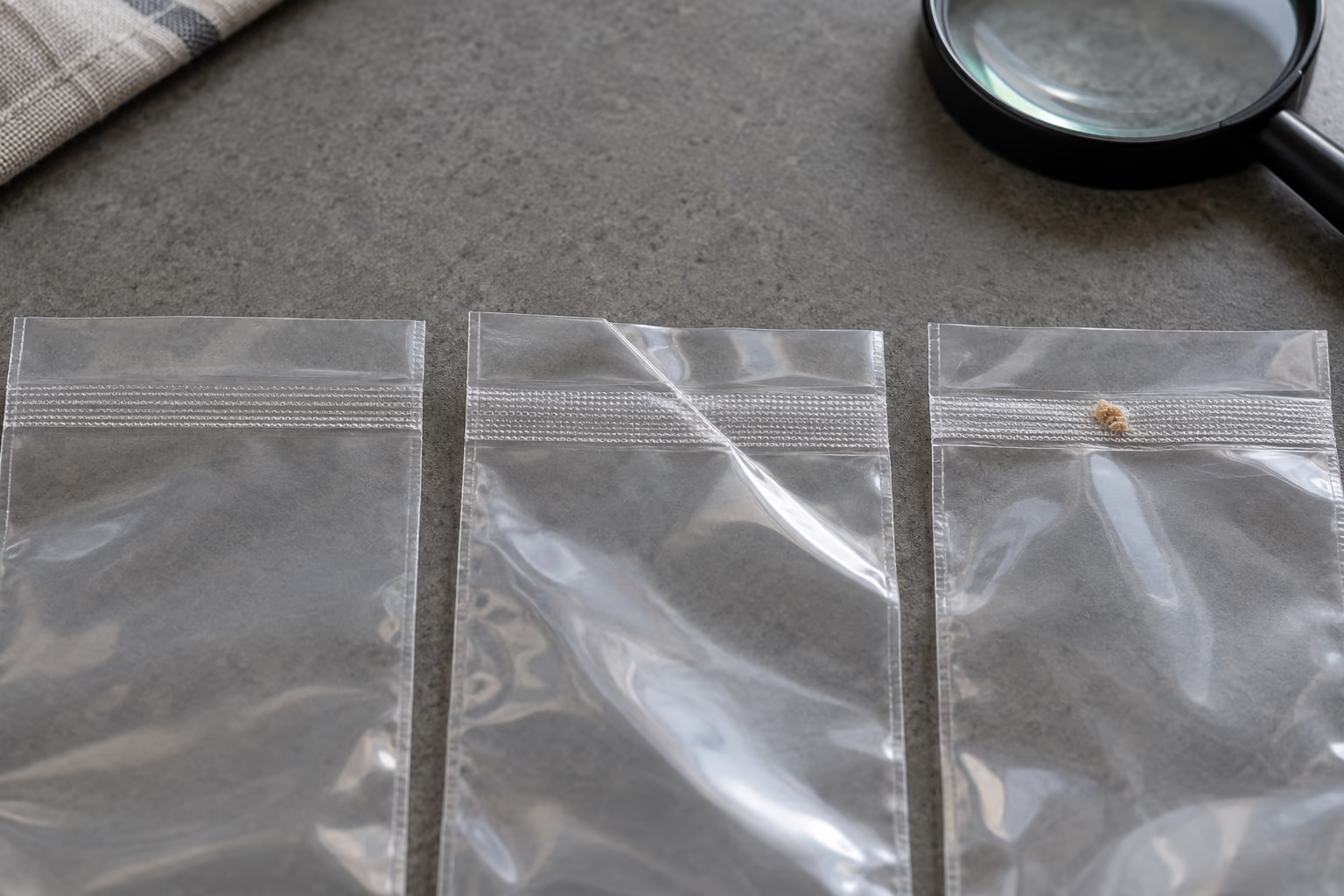
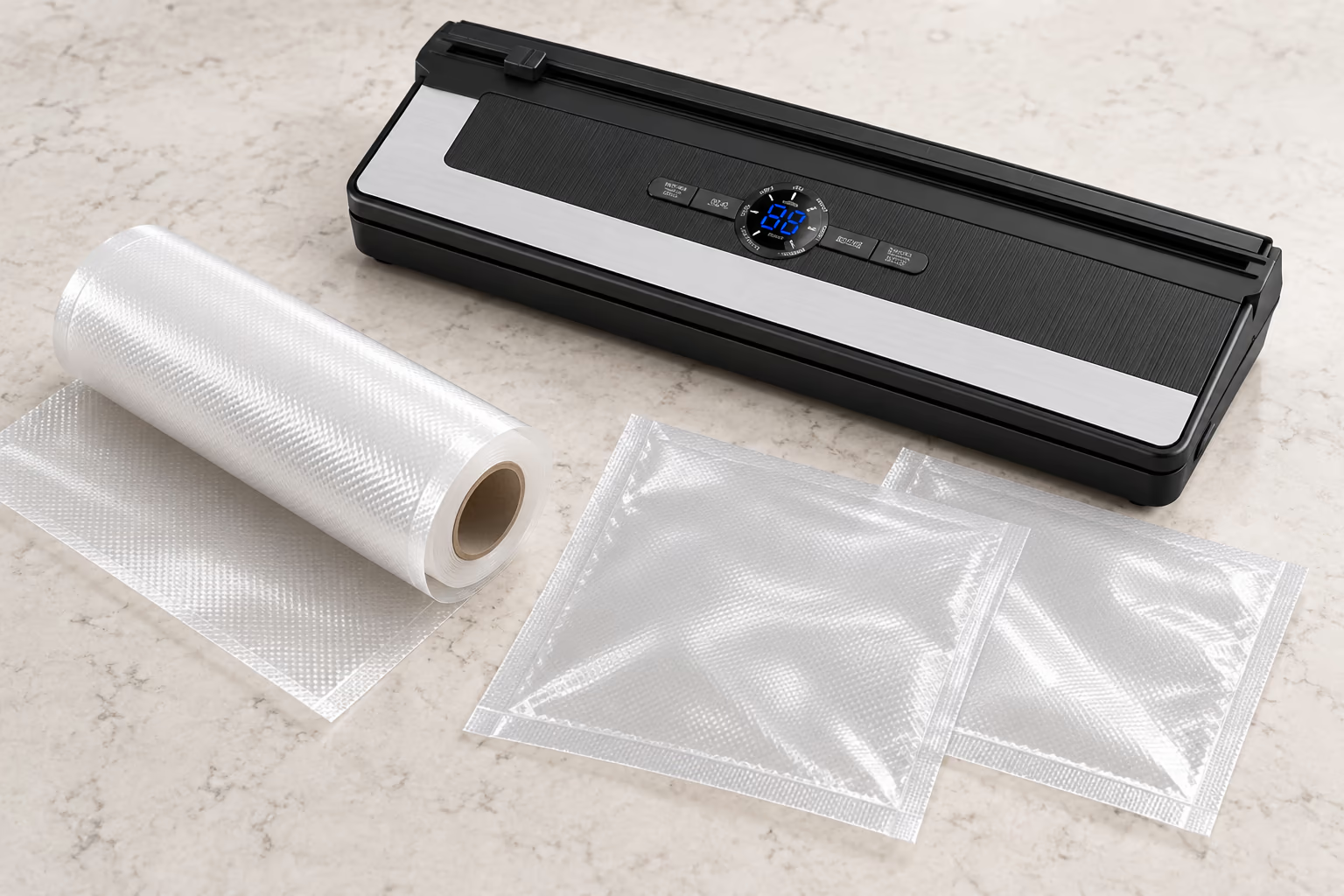
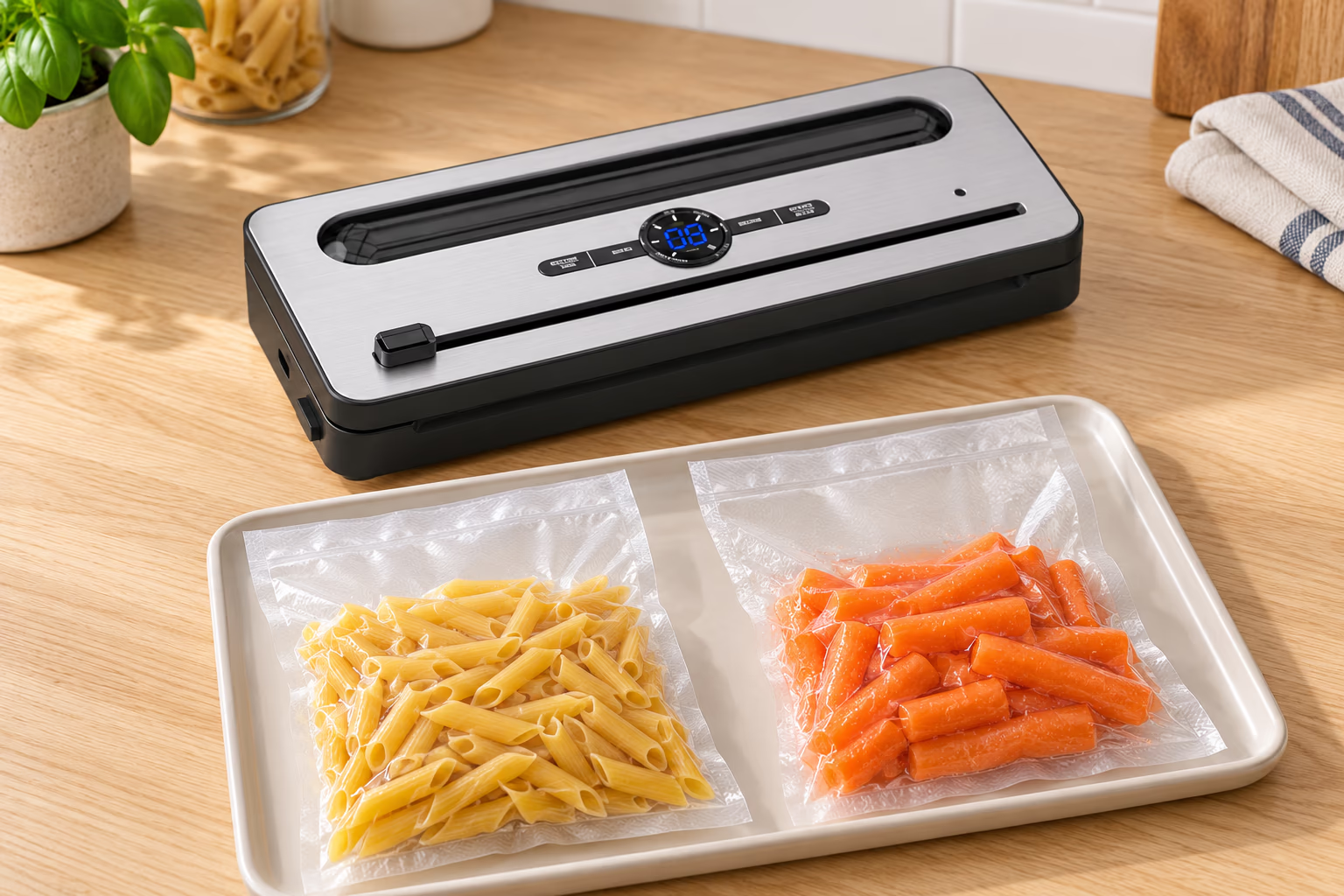
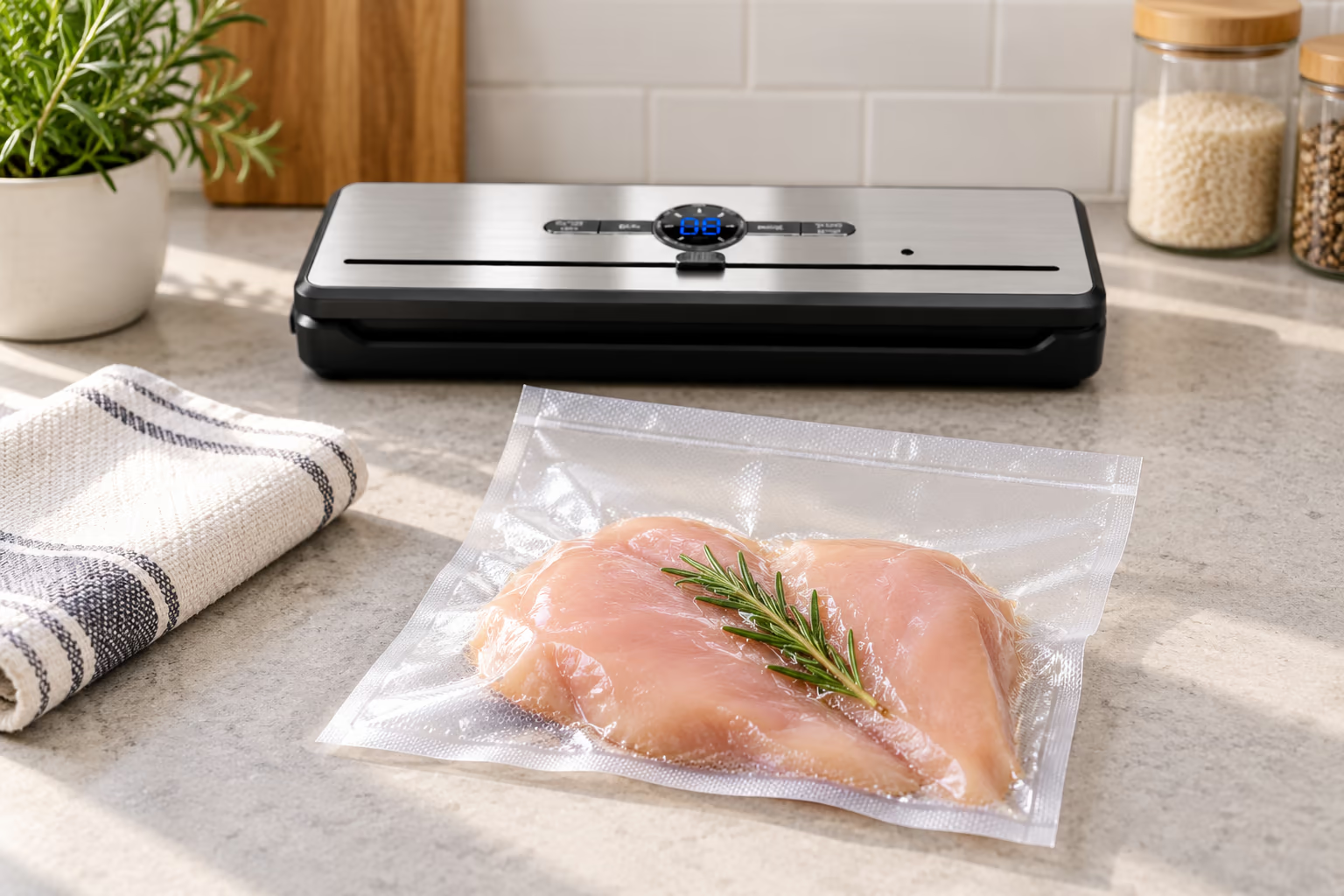
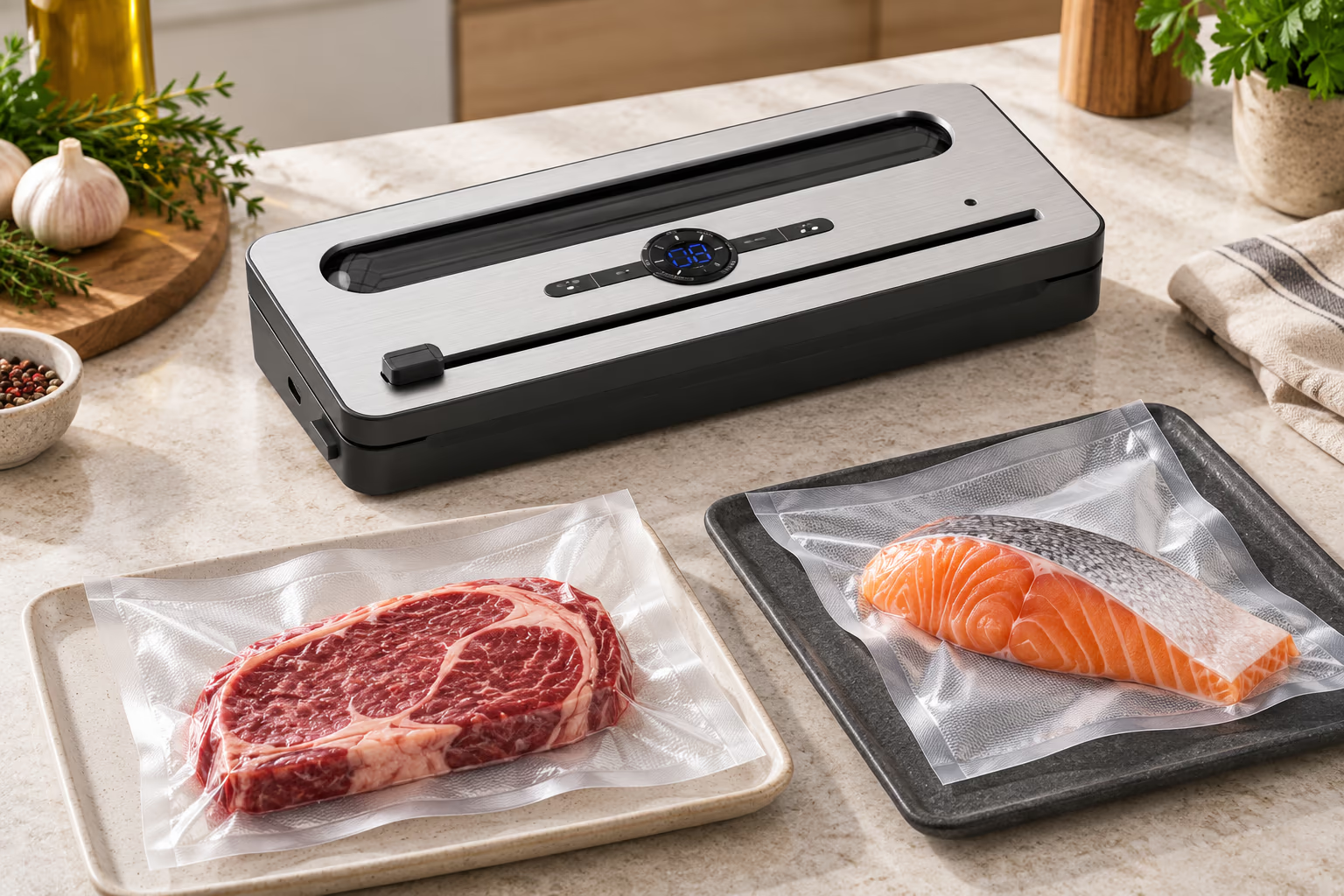
A loose pack, missing seam and burned seam are different faults. Start with the visible symptom and check one variable at a time: pouch, loading, settings, cooling and machine condition. Avoid treating every failure as a worn pump or increasing heat before checking the bag. For the operating cycle, read how a vacuum sealer works.
Problem 1: The Bag Does Not Seal
Check power, the selected programme, lid locking and correct pouch placement first. Confirm that the bag’s sealing layer is compatible with the machine. A cycle that only removes air or a mouth that misses the sealing strip can look like a heater failure.
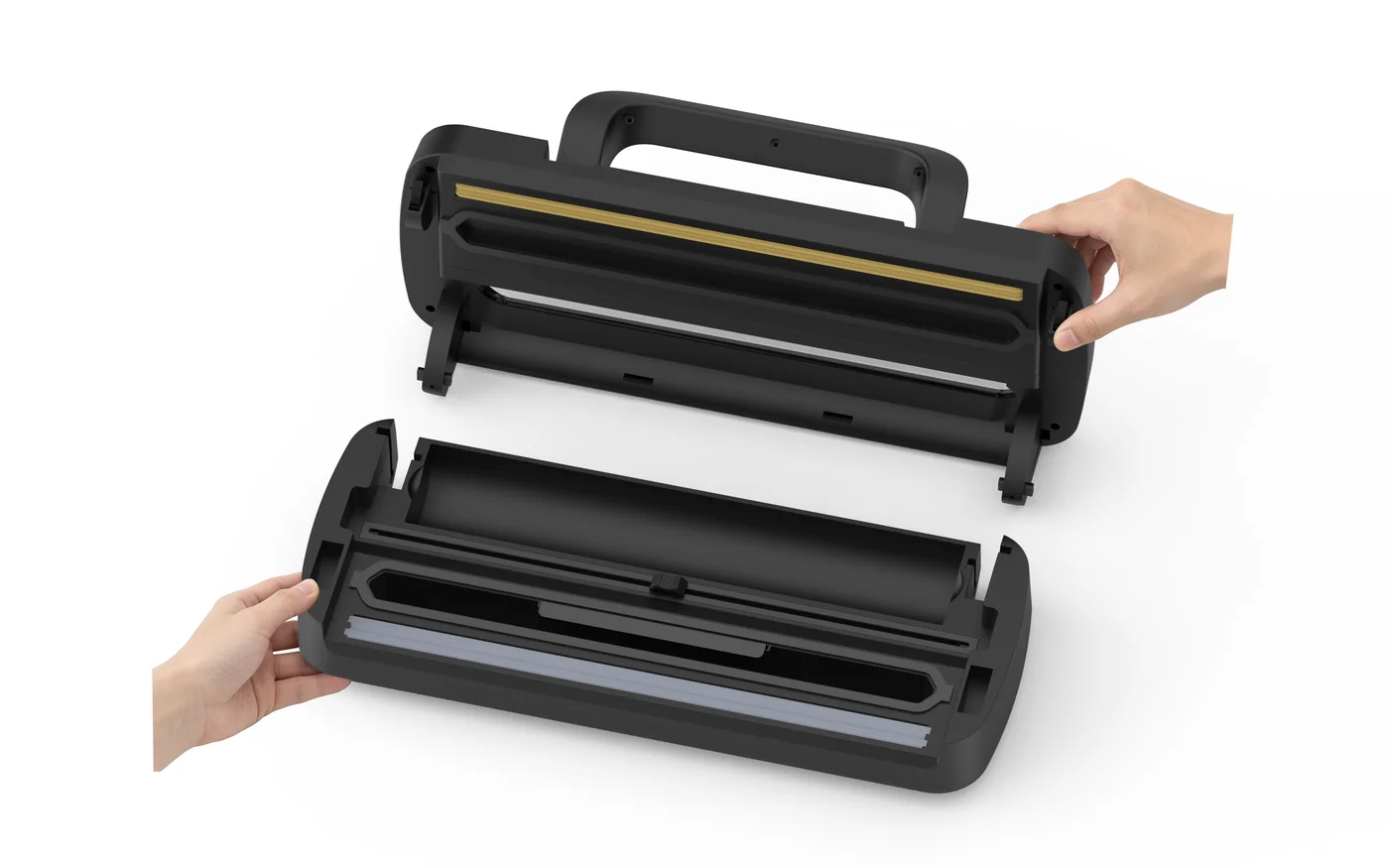
Keep the neck flat and free of moisture, grease and crumbs. Inspect the accessible sealing surface after switching off, unplugging and allowing it to cool. Damaged PTFE protective covering or a worn pressure surface may prevent an even seal, but these are possible causes rather than a diagnosis from the symptom alone.
Use the manufacturer’s approved cleaning method. Do not assume that alcohol, a brush or an abrasive is safe on every coating or gasket. Replace consumable parts only as the manual permits. A suspected electrical or heater fault needs qualified service; do not continue operating a visibly damaged surface.
Problem 2: Air Is Not Fully Removed
Most channel-type external machines need embossed bags; smooth film can close the air path. Nozzle-type and chamber machines have different requirements, so check the model manual rather than diagnosing machine type by whether a smooth bag happens to shrink. See bag compatibility.
Check that the open mouth reaches the vacuum channel and is not folded shut. Make sure gaskets are seated and that no crumbs or liquid interrupt the lid seal. Inspect accessible collection trays and filters according to the manual. Do not probe internal passages, bypass filters or pull liquid through the pump to clear a blockage.
Pouch size, product geometry, trapped pockets and the selected cycle can all affect air removal. Try a known-compatible pouch and a repeatable dry sample. If performance remains poor, document the comparison for service. A loose-looking pouch alone does not identify a worn pump or measure its pressure.
Problem 3: The Seal Burns Through or Sticks
Film can be damaged by excessive heat input, unsuitable sealing time, contamination or a worn protective surface. Thinner film does not automatically have a lower melting temperature: polymer structure and layer composition matter, while thickness affects the heat needed to form a seam.
Where the machine offers approved adjustments, start with its documented settings for the film and change one setting at a time. Respect the interval between cycles; heat accumulation can alter later seals. If the machine has no relevant adjustment, select a documented compatible pouch rather than improvising a setting or repeatedly sealing a damaged strip.

Problem 4: A Tight Pack Becomes Loose Later
A later leak can come from a wrinkle crossing the seam, contamination, a pinhole, a sharp product edge or handling damage. Inadequate cooling before pulling or stacking can also stress a new seam. Do not assume that cooling is always the cause.
Wait for the complete cooling sequence. Check the seam across its full width, inspect corners and product contact points, and compare the pack after normal handling. For production work, use an appropriate documented leak or seal-strength test and retain labelled samples. A firm hand squeeze or a photograph is not a validated leak test.
Two seal lines can provide useful redundancy in a suitable process, but both can share the same wrinkle or contamination. Read single and double seals before treating the second line as a cure. For bone damage, review meat and seafood packing.
Problem 5: The Machine Overheats or Stops
Follow the stated duty cycle, ventilation clearance and thermal-protection instructions. A domestic countertop model should not be assumed suitable for uninterrupted production because it completes a few fast cycles.
Stop if there is smoke, a burning smell, damaged wiring or unusual heat. Disconnect power when safe and arrange qualified service. For a normal thermal cut-out, follow the manual’s recovery procedure; do not bypass protection or repeatedly restart to force output. Frequent interruptions are a reason to review workload, model choice and service condition.
Problem 6: Liquid Reaches the Suction Area
Stop using the affected cycle and follow the manual’s procedure for liquid collection and cleaning. Standard external machines are not liquid pumps. A moist mode can change the cycle or sealing behaviour, but it does not guarantee that liquid cannot enter the suction path.
Use suitable loading, an adequate empty neck and approved control of air removal. Depending on the food and process, chilling or partially freezing liquid components may help packing, while a suitable chamber machine may fit a liquid-rich workload better. Chamber packing still needs temperature and fill controls because liquids can boil under reduced pressure. Do not add an improvised hose trap or filter unless the manufacturer approves it.

Preventive Care and a Useful Fault Record
Use the manufacturer’s cleaning and replacement intervals. After use, inspect and clean only the parts designated for user access; allow them to dry and refit them correctly. Keep the lid stored as instructed to protect the gaskets. Internal electrical connections, pump repair and internal hoses belong to service work unless the manual explicitly provides a user procedure.
When requesting help, record the model, pouch supplier and structure, size, food or dry test sample, programme, cycle interval and when the fault appears. Include a clear seam photo and whether an identical known-good pouch behaves differently. This gives VANTASE support a useful starting point without an invented diagnosis.
If a food pack has failed, assess its time and temperature history before considering repacking. Resealing does not make unsafe food safe. The UK Food Standards Agency’s vacuum-packaging guidance explains why reduced oxygen requires food-safety controls; use the requirements for your own market.