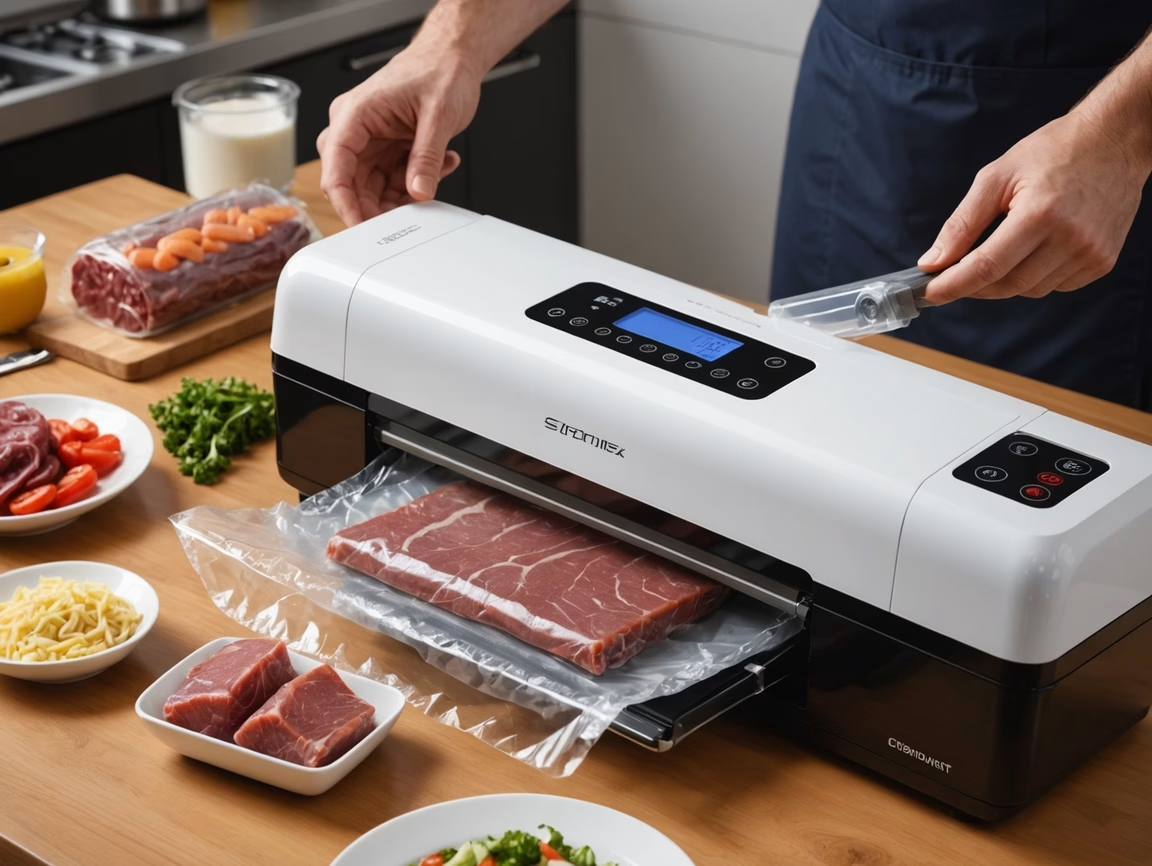












If you’ve ever picked up a vacuum bag and wondered what you’re actually holding, you’re not alone. Most people assume vacuum bags are just thick plastic. The reality is more interesting—these are engineered multilayer films where every layer serves a specific purpose, and understanding what you’re buying makes a real difference in performance. External sealers need embossed channel film; chamber units can use smooth structures.
The Multi-Layer Architecture
Vacuum bags aren’t a single sheet of plastic. They’re co-extruded multilayer films—typically 3 to 7 layers fused together during manufacturing. Each layer contributes something the others can’t provide alone.
The most common structures you’ll encounter:
- PA/PE: Nylon outer layer, polyethylene inner. Good barrier, good seal, economical. The workhorse of food vacuum packaging.
- PE/PA/PE: Polyethylene outer, nylon middle, polyethylene inner. The nylon sits between two PE layers for better moisture protection on both sides.
- PA/EVOH/PA/PE: Adds an EVOH oxygen barrier layer between nylon layers. Used for extended shelf life applications where maximum oxygen blocking matters.
PA stands for polyamide—what most people call nylon. It’s the layer that gives the bag its structural strength and puncture resistance. PE is polyethylene, the food-safe plastic that actually gets melted during the sealing process.
Why PA Is Commonly Used
PA is commonly used because it can contribute mechanical strength, puncture resistance, and oxygen-barrier performance in a multilayer film. This is why a PA/PE vacuum pouch can behave very differently from an ordinary PE freezer bag. Barrier performance still depends on the complete film structure, layer distribution, thickness, and test conditions; do not infer it from a material name alone.
The technical figure buyers normally request is OTR (Oxygen Transmission Rate), often reported in cc/m²·day under stated test conditions. Use OTR to compare like-for-like film specifications, but check the temperature, humidity, thickness, and test method before comparing supplier figures.
Nylon also provides the puncture resistance that makes vacuum bags durable. The material can stretch significantly before tearing, which protects against the sharp edges that inevitably show up when you’re sealing bone-in proteins or irregularly shaped products.
The EVOH Factor
EVOH (Ethylene-Vinyl Alcohol) is the oxygen barrier champion. Its OTR is roughly 10x better than nylon alone. But EVOH has a critical weakness: it’s hydrophilic. It absorbs moisture and loses its barrier properties when wet.
EVOH is commonly protected within a multilayer structure because moisture can affect its barrier behaviour. In a multilayer film it is often placed between PE or PA layers. The exact layer arrangement is a film-design decision that should be confirmed in the supplier specification.
For most home and restaurant users, standard PA/PE bags are perfectly adequate. You only need EVOH-based structures when you’re storing highly oxygen-sensitive products for extended periods or when regulatory requirements demand maximum barrier performance. Pair material choice with the right bag thickness for your application.
Understanding Thickness Specifications
Thickness is where buyers often get confused. You see specs like 90μm, 100μm, 4mil, 6mil and need to make sense of it.
Microns (μm): One micron equals one-thousandth of a millimeter. Most commercial vacuum bags fall between 60μm and 150μm.
Mil: One mil equals one-thousandth of an inch, or 25.4 microns. A 4mil bag is about 100μm.
Thickness should be selected for the product, pouch structure, machine, and handling route. A useful sampling framework is:
- 60–80μm: Light-duty or lower-puncture-risk products.
- 90–100μm: A common starting range for many food-packing pouches.
- 120–150μm: Worth testing for bone-in, sharp, heavy, or demanding frozen products.
These are not universal grades. Confirm seal performance, puncture resistance, and the actual film construction with a sample. See vacuum bag thickness and performance for the sample-based approach.
The thickness you need depends on your application. A restaurant sealing pre-portioned chicken breasts needs different specs than someone storing whole primals for weeks in a freezer. Longer storage goals usually align with guidance in why vacuum sealing extends shelf life.
Food Contact Safety
For vacuum bags used with food, you need food contact certification. This isn’t optional or marketing—it’s regulatory.
In the United States, food-contact status depends on the material components and intended conditions of use; buyers commonly ask suppliers to identify the relevant FDA food-contact basis, which may include 21 CFR references. For EU sales, buyers commonly request a Declaration of Compliance and supporting information appropriate to the applicable plastics rules, often including the intended use conditions. Some destination markets or customers can ask for additional documentation.
Ask for documentation that matches the food type, contact time and temperature, processing, and destination market—not a generic “food grade” statement. If a supplier cannot provide documentation suitable for the intended application, do not treat the material as cleared for that application.
Why Cheap Bags Fail
Vacuum-bag prices vary substantially by material structure, dimensions, finish, quality controls, order quantity, and market. The difference is not arbitrary, but it should be evaluated against the finished pouch specification rather than a generic price band.
Layer integrity: Cheap bags often use less nylon, thinner barrier layers, or less sophisticated coextrusion. The layers may not bond properly, leading to delamination—where the layers separate during storage or use. A delaminated bag has compromised barrier performance.
Seal consistency: The PE layer in cheap bags may have inconsistent thickness or composition. The sealing wire needs consistent material to create a reliable hermetic seal. Inconsistent PE means some areas seal well, others poorly, and you don’t know which until the bag fails.
Thickness variation: Budget manufacturers have less quality control. A roll nominally rated at 90μm might have thin spots at 70μm that fail under load or don’t seal properly. Quality manufacturers maintain tight tolerances.
Pinholes: Microscopic pinholes in the barrier layer are nearly invisible but let oxygen through, defeating the entire purpose of vacuum packaging. Premium bags go through electronic testing to catch pinholes before they ship.
Thickness vs. Performance: The Real Tradeoffs
Thicker bags aren’t automatically better. They cost more and can be harder to seal properly (more material for the heat to penetrate). The key is matching thickness to application:
For soft goods, delicate items, or short-term storage, 70-80μm bags work fine and save money. For bone-in proteins, heavy items, or storage beyond a few weeks, the puncture resistance of 100μm+ bags is worth the extra cost.
The most common mistake I see is buying bags that are either over-specified (spending more than necessary) or under-specified (trying to save money and paying for it in failures). Match your bag to your actual use case, and confirm sealer compatibility before ordering in bulk.
Storage and Shelf Life of the Bags Themselves
Vacuum bags have a shelf life. The PE and PA materials can degrade over time, especially when exposed to heat, UV light, or physical stress. Most manufacturers recommend using bags within 12-24 months of manufacture.
Old bags may seal poorly or have reduced barrier performance. If you’ve been storing a box of bags for two years in a hot warehouse, test them before committing to a large batch sealing operation.
Store bags flat, protected from direct light, at moderate temperatures. A cool, dark closet is ideal. A hot garage near a window is not.
Reading the Specifications
When evaluating vacuum bags, look beyond price. The specifications that matter:
- Material structure: PA/PE, PE/PA/PE, or more complex. Know what you’re getting.
- Thickness: Both overall gauge and whether it’s consistent.
- OTR value: Lower is better for oxygen barrier.
- Food contact certification: FDA, EU 10/2011, or LFGB documentation.
- Temperature range: Bags rated for freezer use may not handle cooking applications.
A reputable supplier will provide all this information. If they’re vague about specifications, that’s a red flag. Quality manufacturers are proud of their technical specs because they know they outperform budget alternatives.