











Shopping for a vacuum sealer means navigating a specifications sheet with technical terms that aren’t always clearly explained. I’ve put together this guide to help you understand what each specification actually means in practice, so you can make a purchasing decision based on real performance rather than marketing claims.
Vacuum Pressure (kPa)
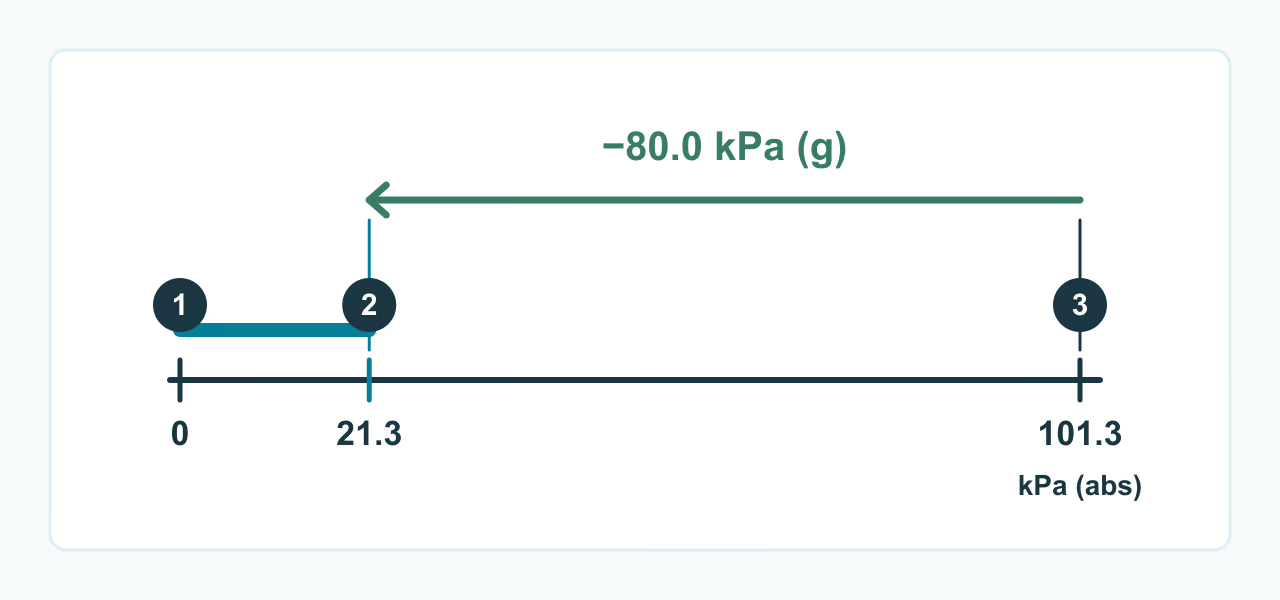
Pressure is the most quoted performance specification, but it is useful only when the supplier states its reference, measurement point, and test conditions. External machines are commonly specified around -60 to -80 kPa; chamber machines are commonly specified deeper. Do not treat a maximum-pressure figure as a direct prediction of residual oxygen or shelf life. Compare candidate machines with the same pouch and product; see vacuum pressure explained.
Pump Type and Quality
The pump is the core of the machine. Three common types:
Diaphragm pumps: Compact and common in many smaller machines; generally chosen for moderate-duty, accessible equipment.
Rotary vane pumps: Used in some commercial equipment and often selected where faster extraction and a more demanding duty cycle are required.
Piston pumps: Used in some equipment designs, including systems intended for higher-duty applications.
Pump quality within each type varies significantly. A quality diaphragm pump outperforms a cheap rotary vane pump. Look for manufacturer reputation and user reviews, not just pump type.
Sealing Bar Width
This determines the maximum bag width your sealer can handle. Standard widths: 11-12 inches (280-305mm) for most machines. Larger bars up to 15-16 inches for industrial equipment.
Match to your actual needs. If you’re never sealing bags wider than 10 inches, a 12-inch bar gives you flexibility you don’t need. If you occasionally need wider bags, the extra width is worth paying for.
Seal width (the actual width of the heat seal) should be at least 3-4mm for reliable seals. Wider seals are generally stronger.
Cycle Time and Throughput
Cycle time is how long one sealing operation takes. External machines commonly run a cycle in the tens-of-seconds range; chamber cycles can be shorter for a comparable pack, but each programme and product changes the result. Compare the complete cycle with your actual product, including loading, evacuation, sealing, cooling, unloading, inspection, and cleaning.
Look at the complete cycle—some machines advertise fast vacuum extraction but slow sealing phases that drag out the total cycle.
Duty Cycle
Duty cycle is how many cycles a machine can run consecutively before needing to cool down. This is critical for commercial use.
Consumer and commercial machines may state duty-cycle guidance differently. Smaller equipment may be intended for intermittent use, while commercial equipment may publish continuous-operation or rest-period guidance. Ask the supplier for the expected operating pattern, thermal protection behaviour, and rest requirements for the intended workload.
If you’re sealing 50+ bags per day, check the duty cycle. A machine that overheats after 20 consecutive cycles will frustrate high-volume operators.
Power Consumption
Wattage is an electrical specification, not a direct vacuum or sealing-performance grade. Small consumer machines and commercial equipment can differ substantially in rated power, but a larger wattage number alone does not prove faster evacuation or a stronger seal. Confirm the model’s rated power, plug, voltage, and circuit requirement for the installation.
Note that high-wattage machines draw significant current—check that your electrical circuit can handle the load if you’re installing in a commercial kitchen.
Build Quality and Materials
Housing materials: ABS plastic is common in consumer machines. Stainless steel in commercial and premium models. Stainless steel is more durable, easier to clean, and looks more professional—but costs more.
Build quality affects longevity. Metal components (gears, shafts, housing) last longer than plastic equivalents. If you’re buying for commercial use, pay for the more durable construction—it pays back over years of operation.
Control Type
Mechanical timers: Simple, reliable, less precise. Used in budget machines. Settings may drift over time.
Electronic controls: Digital displays, precise timing, often multiple modes. More consistent and adjustable. Standard in mid-range and premium machines.
Smart features: Some machines include sensors that detect bag type, adjust vacuum automatically, or provide maintenance alerts. Useful but not essential.
Bag Compatibility
As discussed elsewhere, external sealers require embossed bags. Chamber sealers accept both embossed and smooth bags. Confirm compatibility before purchasing bags.
Check the maximum bag width the machine can accommodate. Check whether it accepts bag rolls (cut-to-length) or only pre-made bags.
Features That Matter
Moist mode: Essential if you’ll seal liquid-heavy foods in an external sealer. Not relevant for chamber machines.
Pulse vacuum control: Valuable if you’ll seal delicate foods. Allows manual control of vacuum depth.
Adjustable sealing temperature: Allows matching to different bag thicknesses and materials.
Vacuum hose attachment: Some machines can attach to external containers or jars, expanding versatility.
Making the Decision
List your actual requirements before shopping:
- Typical bag size you’ll use
- Daily sealing volume
- Types of food you’ll seal (dry, moist, liquid)
- Available counter space
- Budget range
- How often you’ll use it
With clear requirements, specifications become meaningful tools for comparison rather than confusing numbers. The best machine isn’t the one with the highest specs—it’s the one that matches your actual needs at a price that makes sense for your use pattern.