Vacuum sealing is widely used in food preservation, packaging, and industrial storage.
Although the operation appears simple—removing air and sealing a bag—the process involves a combination of controlled pressure, material behavior, and heat sealing technology.
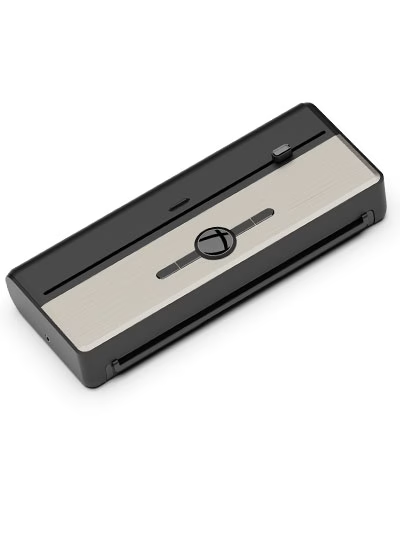
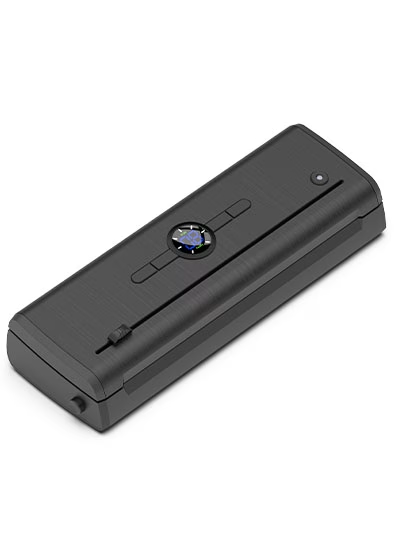
This article explains how a vacuum sealer works from a technical perspective, focusing on external suction vacuum sealers, which are the most common type used with embossed vacuum bags.
1. What Is Vacuum Sealing?
Vacuum sealing is a packaging process that removes air from a package before sealing it closed.
By reducing the oxygen concentration inside the bag, the process slows oxidation, inhibits aerobic bacterial growth, and minimizes moisture migration.
Unlike modified atmosphere packaging (MAP), vacuum sealing does not replace air with gas.
It simply reduces internal pressure and seals the package in a low-oxygen state.
2. Main Components of an External Vacuum Sealer
An external suction vacuum sealer typically consists of the following core components:
2.1 Vacuum Pump
The vacuum pump generates negative pressure by extracting air from the bag through the opening.
Most household and light commercial models use diaphragm or piston pumps.
Key parameters:
- Maximum vacuum pressure (kPa or mbar)
- Pump flow rate
- Duty cycle and heat tolerance
2.2 Sealing Chamber (External Type)
In external sealers, only the bag opening is placed inside the vacuum channel, while the food remains outside the machine.
This design requires special bag structures to allow air extraction.
2.3 Heating Wire (Sealing Element)
The heating wire melts the inner sealing layer of the vacuum bag (typically PE-based).
After heating, pressure is maintained while the seal cools and solidifies.
Important factors:
- Heating temperature
- Heating duration
- Cooling time
2.4 Control System
The control board manages:
- Vacuum time
- Sealing time
- Cooling delay
- Mode selection (Dry / Moist / Pulse)
3. Step-by-Step: How the Vacuum Sealing Process Works
Step 1: Bag Placement
The open end of the vacuum bag is placed over the vacuum channel and aligned with the sealing bar.
For external vacuum sealers:
- Embossed vacuum bags are required
- Smooth bags usually cannot be vacuumed effectively
Step 2: Air Extraction
Once activated, the vacuum pump starts extracting air from the bag.
Air flows:
- From inside the bag
- Through the embossed air channels
- Into the vacuum channel
- Out through the pump
The vacuum level increases as internal pressure drops.
Step 3: Pressure Detection
The machine monitors vacuum conditions either by:
- Time-based control, or
- Pressure-based sensors (in higher-end models)
Once the target vacuum level is reached, the system transitions to sealing.
Step 4: Heat Sealing
The heating wire activates and melts the inner sealing layer of the bag.
Key requirement:
- The bag must remain stationary
- Internal pressure must remain low
- Sealing temperature must match bag thickness and material
Step 5: Cooling and Release
After heating, the machine maintains pressure while the seal cools.
Once the cooling cycle completes, air is released from the vacuum channel and the bag can be removed.
A properly sealed bag should show:
- A continuous seal line
- No bubbles or gaps
- Uniform seal width
4. Why Embossed Vacuum Bags Are Necessary
External vacuum sealers cannot evacuate air from smooth bags because the bag walls collapse under pressure, blocking airflow.
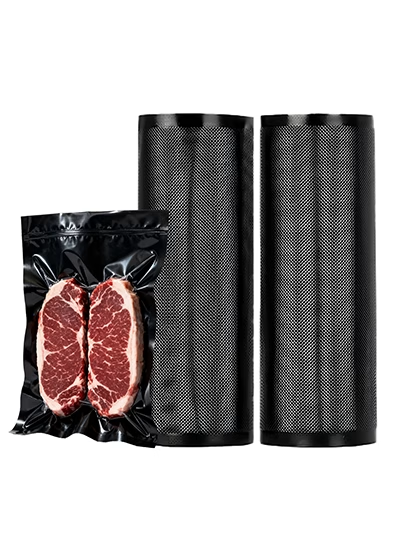
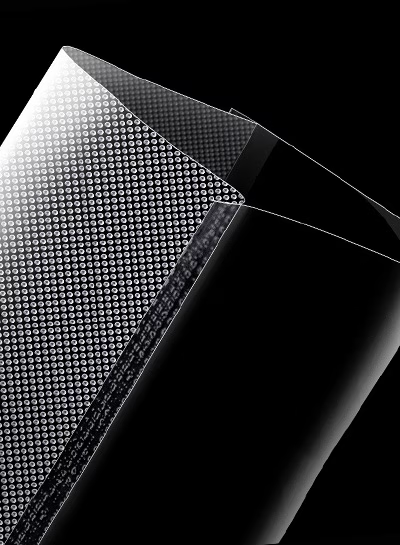
Embossed vacuum bags solve this by incorporating:
- Diamond or dotted surface patterns
- Micro air channels between bag layers
These channels:
- Maintain airflow during evacuation
- Collapse only after sealing is complete
This is why bag structure is as important as machine performance.
5. Key Technical Factors Affecting Performance
5.1 Bag Material and Thickness
- Thicker bags require longer heating and cooling times
- PA/PE ratios affect oxygen barrier performance
- Inconsistent thickness leads to weak seals
5.2 Sealing Temperature and Time
Too low:
- Incomplete fusion
- Seal failure after storage
Too high:
- Bag deformation
- Burn marks
- Brittle seal lines
5.3 Cooling Time
Insufficient cooling causes seals to reopen when pressure is released.
This is a common reason for “air coming back” after sealing.
6. Common Misunderstandings
- Vacuum strength alone does not guarantee good sealing
- Higher temperature is not always better
- Bag compatibility matters as much as machine power
Vacuum sealing is a system where machine, bag, and process parameters must match.
7. Conclusion
A vacuum sealer works by combining controlled air extraction with precise heat sealing.
Understanding the interaction between vacuum pressure, bag structure, and sealing parameters is essential for consistent and reliable results.
For external vacuum sealers, proper bag design and material selection are just as critical as the machine itself.